
Blog
Willemstad, Curaçao: Dutch Colonial History With A Caribbean Rhythm

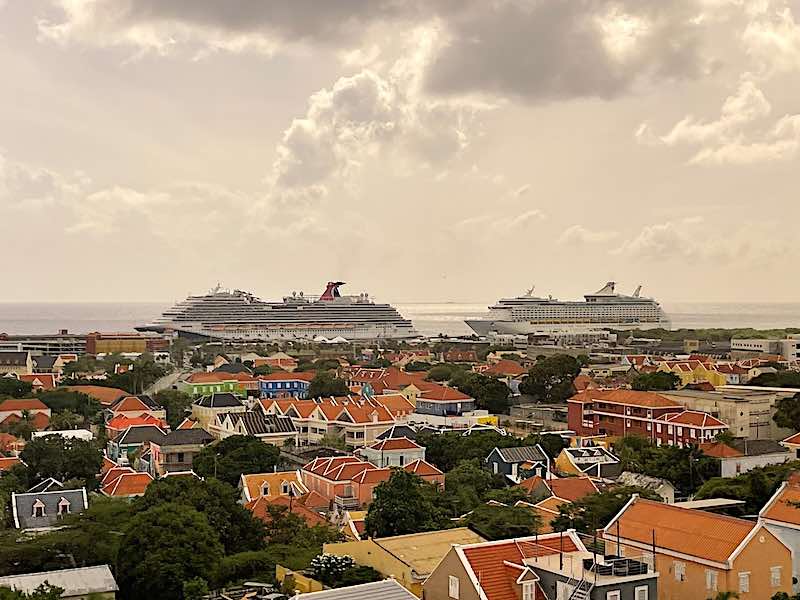
Cruise ships anchored in the Otrobanda section of Willemstad
What makes a great port of call for a cruise excursion? I often ponder this question, especially when I am looking to book a new cruise. For many individuals, the primary factor is the ease of beach access, enabling passengers to disembark from the ship and reach a stunning, accessible beach with minimal transportation challenges.
For others, it is the availability of diverse activities that offer visitors a range of choices, including duty-free shopping, upscale dining, and adventure-oriented excursions. Personally, I value cultural and historical depth. I take great pleasure in the opportunity to stroll directly from the ship into a historic colonial city, complete with century-old forts and vibrant local architecture.
I have embarked on more than 30 cruises throughout the Caribbean Sea and have explored numerous ports of call. Frankly, over the years, the ports I have explored have not left a lasting impression, primarily because they lack cultural, historical, or attraction-based offerings. It is quite discouraging to review lists of excursions and find that nearly identical beach, water, and alcohol-related activities are presented at each port of call. I must confess, there have been several instances where, following my initial visit, I chose not to disembark the ship during later visits.
I prefer “authentic” islands that are not constructed exclusively for tourists. Certain ports of call consistently attract me, as they provide experiences I truly appreciate. I never tire of exploring the 500-year-old city of Old San Juan in Puerto Rico, I take a ride on the St. Kitts Scenic Railroad each time I arrive in Basseterre, and I am continually impressed by the French/Dutch contrast found in Saint Martin/Sint Maarten. Alongside these remarkable ports of call, I have also developed a fondness for the distinctly Dutch ambiance of Willemstad, Curaçao.
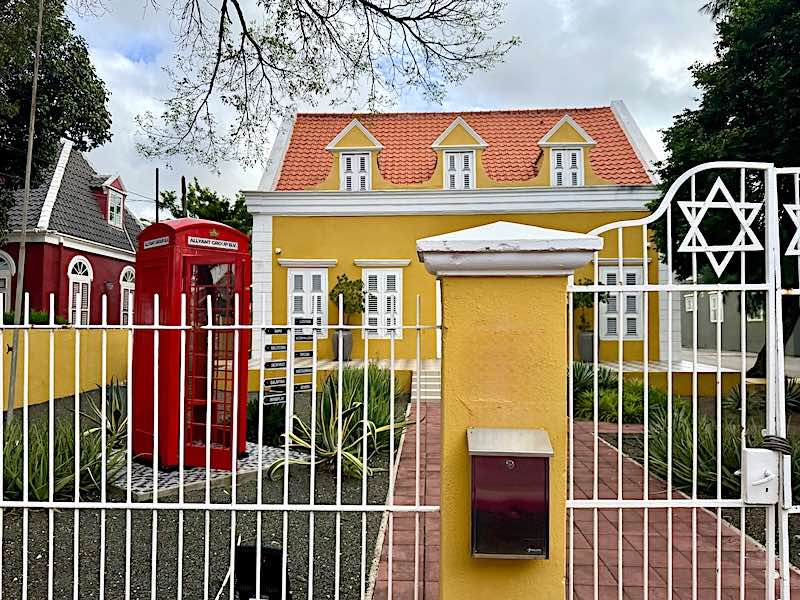
A brightly painted restored mansion along Scharlooweg street
Curaçao and Willemstad
Situated in the southern Caribbean Sea, Willemstad serves as both the capital and the largest city of the island of Curaçao. Previously, the city was the capital of the Netherlands Antilles, which included the islands of Aruba, Bonaire, Curaçao, Saba, Sint Eustatius, and Sint Maarten. Following the dissolution of the Netherlands Antilles on October 10, 2010, Curaçao and the other islands of the confederation became distinct autonomous countries within the Kingdom.
At present, Curaçao is a constituent country of the Netherlands and operates as a self-governing entity within the Kingdom. Curaçao possesses its own government, parliament, and Prime Minister responsible for domestic matters; however, the Kingdom of the Netherlands maintains authority over defense, foreign relations, and ultimate judicial oversight.
Additionally, the Netherlands offers financial assistance, and a Governor appointed by the Dutch acts as the representative of both the monarch and the Kingdom’s government. Citizens of Curaçao hold Dutch passports and are recognized as citizens of the European Union, although the island itself is not included in the Schengen area.
Willemstad presents a unique atmosphere compared to other cities I have explored in the Caribbean. I am captivated by the vibrant colors of the buildings and their distinctive Dutch architectural styles, which immediately inspire me to discover more. The city is organized into four distinct sections. The district closest to the cruise port is Otrobanda. Otrobanda (which translates to “the other side” in Papiamentu) historically served as the residential and cultural heart, while Punda functioned as the main trading center.
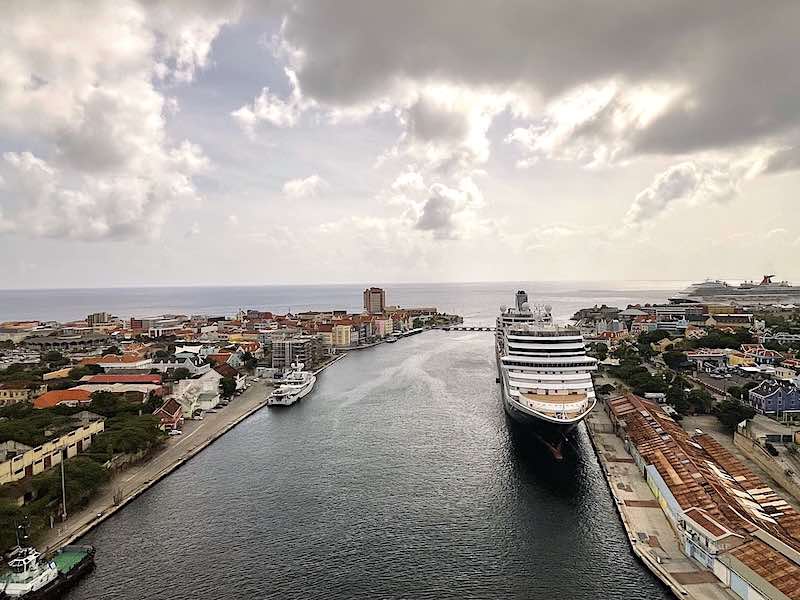
Sint Anna Bay viewed from the Queen Juliana Bridge
The Punda district, which serves as the primary downtown area, is divided from Otrobanda by Sint Anna Bay, a deep water channel that flows into the expansive natural harbour known as the Schottegat. The Scharloo and Pietermaai Smal neighborhoods face each other across the smaller Waaigat harbour. These four unique districts embody a mixture of European, African, and Latin American cultural influences. The entire city centre, characterized by its distinctive architecture and harbour access, was recognized as a UNESCO World Heritage Site in 1997.
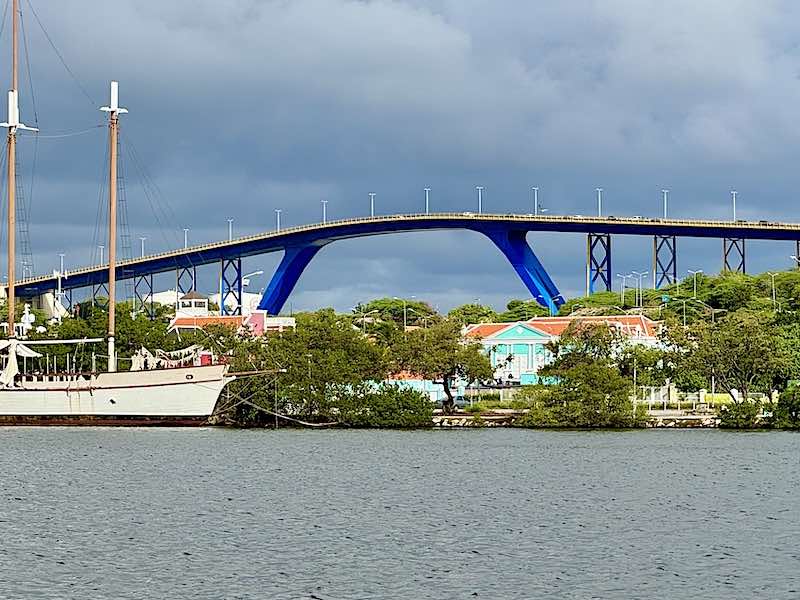
The Queen Juliana Bridge viewed from the Waaigat inlet,
The Bridges of Willemstad
The features of the city that captivate me the most are the four bridges linking different parts of the downtown area. At the heart of Willemstad, spanning Sint Anna Bay, the historic Queen Emma pontoon bridge (Koningin Emmabrug) links the neighborhoods of Punda and Otrobanda. This bridge was named in honor of Emma of Waldeck and Pyrmont, the spouse of King-Grand Duke William III of the Netherlands, who was the ruling monarch at the time of its construction. Initially, the bridge was designed to support both pedestrian and vehicular traffic; however, it is now limited to pedestrian use.
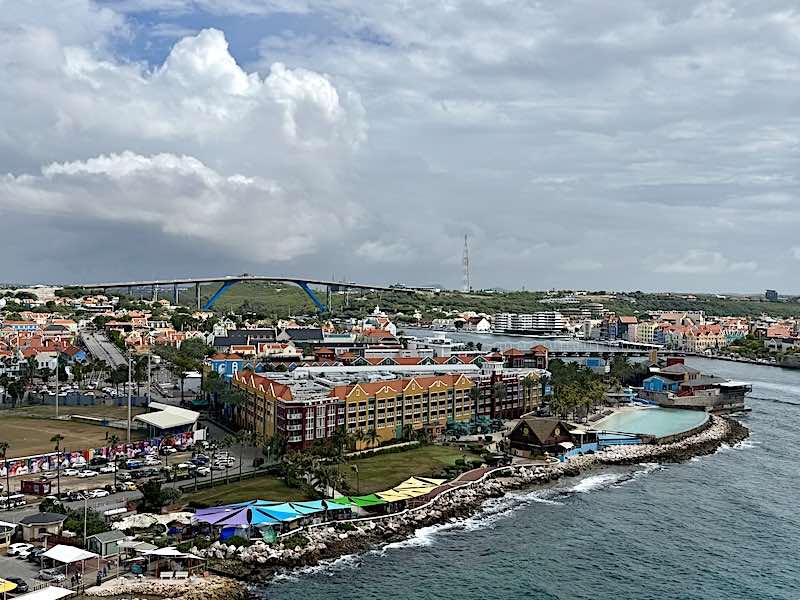
The Otrobanda district viewed from a cruise ship
Originally constructed in 1888 and subsequently renovated multiple times, the bridge is hinged on the Otrobanda side and opens as needed to permit oceangoing vessels to pass through Sint Anna Bay. At the opposite end of the hinged side, there exists a small shelter where an operator manages two diesel engines that drive propellers. The propellers are positioned perpendicular to the length of the bridge, enabling it to swing parallel to the shoreline. Remarkably, this entire process takes only a few minutes to finish.
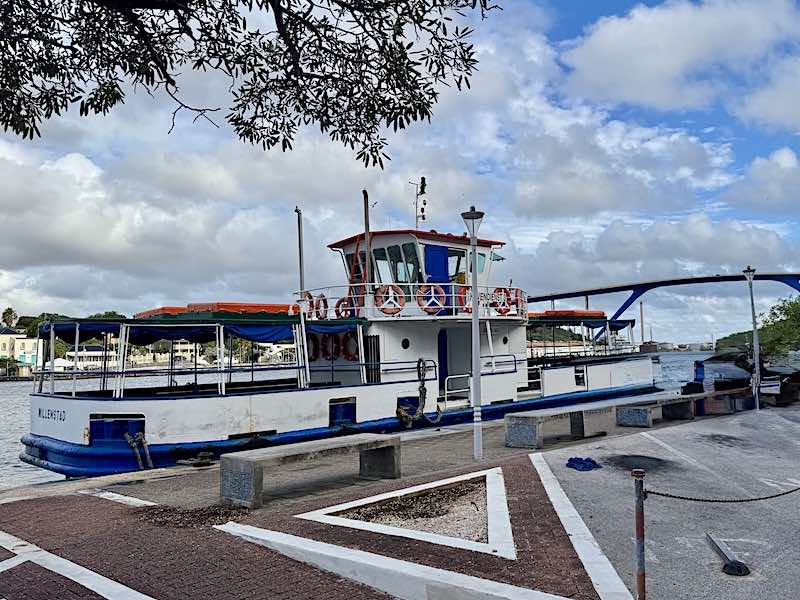
The passenger ferry which crosses Sint Anna Bay when the Queen Emma Bridge is open for ship traffic
Additionally, a passenger ferry operates across the bay whenever the bridge is open to maritime traffic.

The Queen Emma Pontoon Bridge across Sint Anna Bay
I consider the Queen Emma Bridge, commonly referred to as the “Swinging Old Lady,” to be an extraordinary structure that I have not encountered elsewhere. It is truly fascinating to observe how it pivots, allowing the waterway to swiftly accommodate boat traffic. When the bridge is open to pedestrians, I enjoy strolling to the center and observing locals and visitors. It’s an excellent spot for people-watching. Additionally, it provides a superb perspective for capturing photographs of Sint Anna Bay and the vibrant buildings that adorn both sides of the bay. At night, the arch lights that span the entire bridge rotate through a spectrum of rainbow hues, illuminating the bay with vibrant streaks of color.
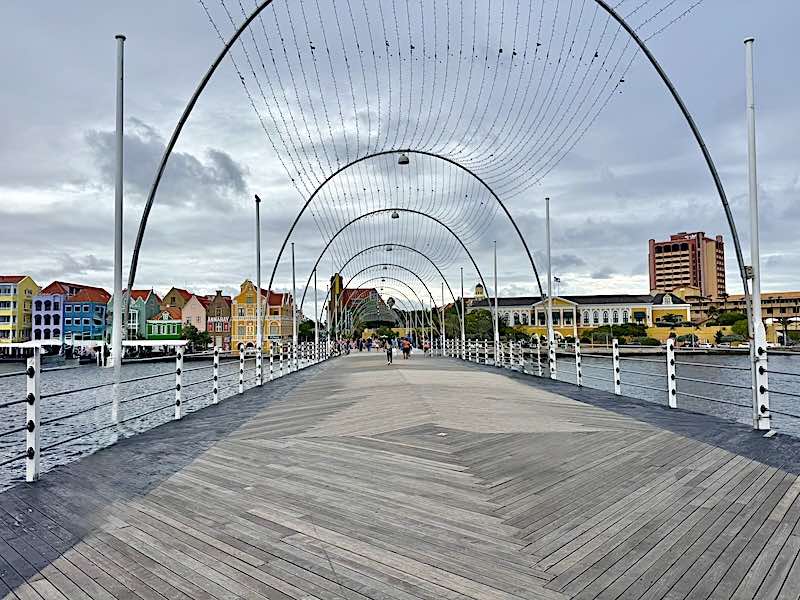
The pedestrian deck of the Queen Emma Bridge
The second significant bridge is the Queen Juliana Bridge (Koningin Julianabrug), constructed in 1967 and named to honor Juliana of the Netherlands, who was the reigning queen during its construction. This structure is visible from nearly all parts of downtown Willemstad and facilitates road traffic across the bay further inland. Its arch structure, which rises to a height of 185 feet (56.4 meters), serves as a picturesque backdrop to Willemstad and dominates the downtown landscape. In fact, the bridge ranks among the highest points in Curaçao and was designed to enable ships to navigate through the narrow harbor without halting automobile traffic. From its summit, one can view the entire downtown area of Willemstad.
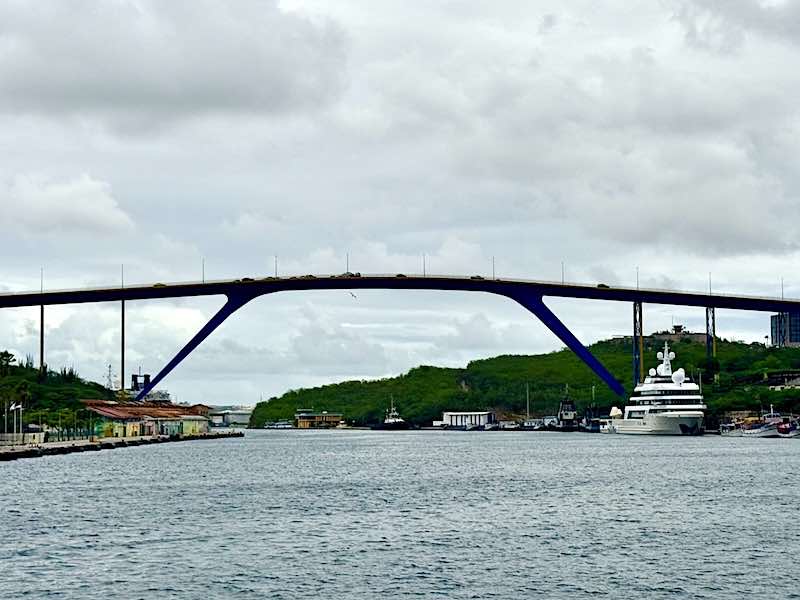
The Queen Juliana Bridge viewed from the Queen Emma Pontoon Bridge
The third and fourth bridges that intrigue me are the Queen Wilhelmina Bridge (Koningin Wilhelminabrug) and the Princess Amalia Footbridge (Brùg Princes Amalia). Both structures remind me of the bridges of Amsterdam. The Queen Wilhelmina Bridge, built in 1928, was named to honor the Dutch queen. Originally designed as a drawbridge, it has been converted into a fixed structure that serves both pedestrians and vehicles.
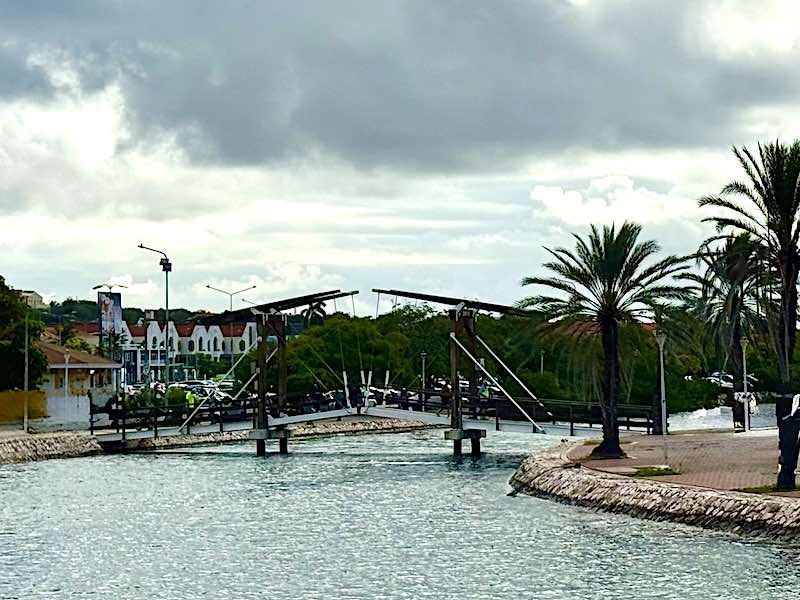
The 2016 Princess Amalia Footbridge (Brùg Princes Amalia), named for Catharina-Amalia, Princess of Orange.
The Princess Amalia Footbridge (Brùg Princes Amalia), which is exclusively for pedestrians and spans 85 feet (26m), was completed in 2016 and named after Catharina-Amalia, Princess of Orange. Both bridges traverse the Waaigat inlet, connecting the Punda and Scharloo neighborhoods, and provide stunning views of the colorful colonial architecture along the waterfront while granting access to nearby shops and cafes.
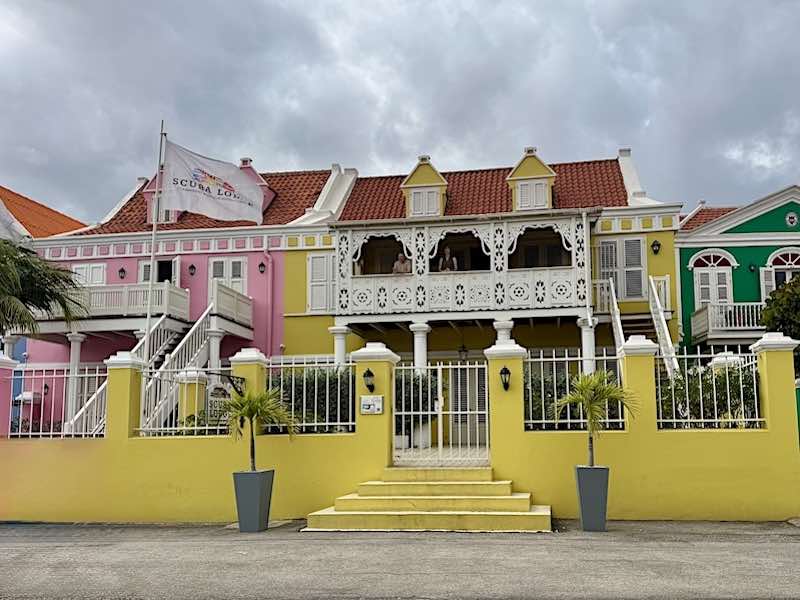
Brightly painted hotels along the waterfront on Kaya Wilson Godett Street
Ways to Explore Willemstad
There are several methods to view and appreciate Willemstad. The city can be conveniently explored by strolling through its diverse neighborhoods. The Tourist Board of Curaçao offers a downloadable Architectural Walking Guide of Historic Willemstad, which highlights various routes for visitors to navigate through the historic downtown areas.
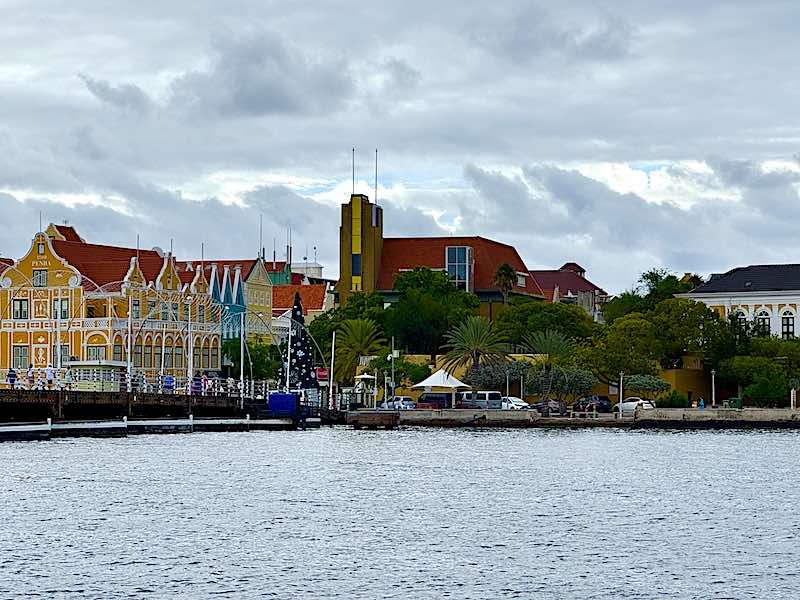
In general, the guide includes both eastern and western walking tours that originate from Sint Anna Bay, adjacent to the Queen Emma Bridge. The eastern tour initiates near Fort Amsterdam and leads visitors along a 1.4-mile (2.25 km) path through the Punda district, which is the oldest section of Willemstad, as well as parts of the Scharloo district close to Sint Anna Bay. The western tour starts at Briónplein (Brión Square) and takes visitors on a 1.25-mile (2 km) trek through the Otrobanda district, located on the side of Sint Anna Bay nearest to the cruise ship docking area.
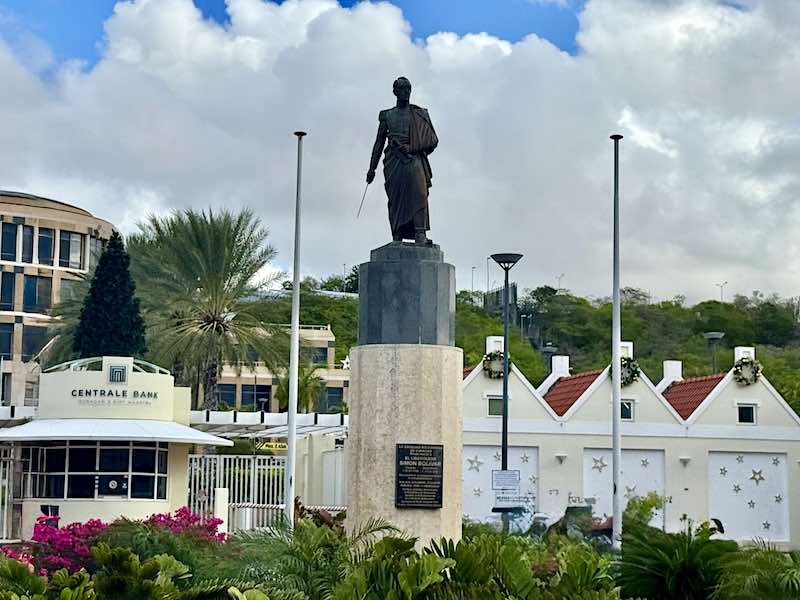
A statue of Simón Bolívar in front of the Venezuelan Consulate in the Scharloo district
Scharlooweg
There are additional options for tourists to consider. Numerous tourist buses that provide narrated tours operate throughout the downtown area. It is also typical for island tours to include a city tour of Willemstad as part of a broader island experience. My first encounter with Willemstad occurred during one of these tours. The benefit of this type of tour is that they typically showcase areas of the Otrobanda, Punda, and Scharloo districts and includes a drive across the Queen Juliana Bridge. While many of these tours do not stop in the city itself, a few do provide a photographic opportunity near the harbor.
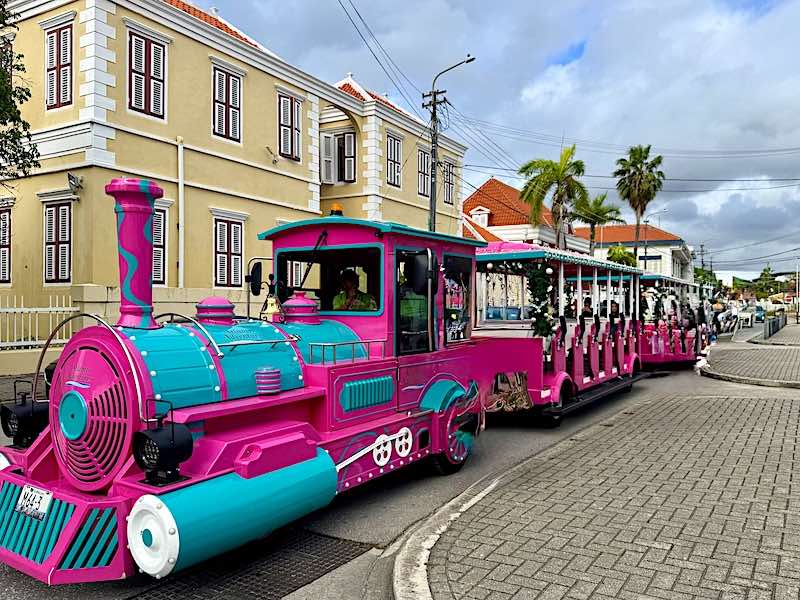
The pink tourist road train, which provides tours of downtown Willemstad
A third alternative, the tourist road train, is similar to those commonly seen in numerous European towns. Having previously walked through various sections of the town and experienced different sites via a small tour bus, I recently opted for the leisurely road train, which is a pink tourist vehicle that resembles a train. The tour extended for just over an hour and included several stops, enabling it to cover areas across all four districts of Willemstad.
Additionally, the tourist train traveled along Scharlooweg street, known for its collection of historic, vividly colored 19th-century mansions constructed by affluent merchants. Although this street is not part of the walking tour, it is undoubtedly a must-visit for tourists keen on the architecture of Willemstad.
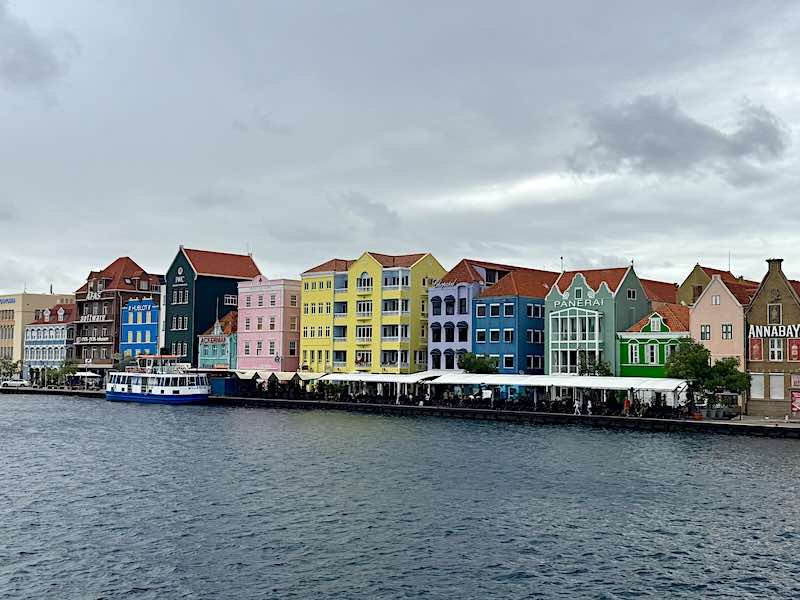
The brightly painted waterfront buildings of the Handelskade
Touring the Historic Districts
My experience on the tourist train led my travel partners and me past many of the significant buildings in Willemstad, and included sites tourists should consider on a visit to downtown Curaçao. All can be reached by walking, but we found that a leisurely riding tour around the city also provided a worthwhile introduction that included numerous suggestions for future locations to explore on foot. Starting at Fort Amsterdam, the tourist train proceeded along the eastern shore of Sint Anna Bay, passing the Handelskade, which features a range of vibrant, colorful 18th-century Dutch colonial structures lining the waterfront.
According to legend, the brightly painted buildings originated from a 19th-century decree issued by Governor-General Albert Kikkert, who asserted that the bright sunlight reflecting off white buildings induced migraine headaches and vision problems for him. In 1817, he mandated that structures should be painted in colors other than white, thereby establishing a lasting tradition that characterizes the UNESCO World Heritage city to this day. Local folklore adds another element to the narrative, suggesting that Governor Kikkert not only mandated painting buildings in diverse colors but also held shares in the island’s sole paint factory, turning his health concern into a lucrative venture.
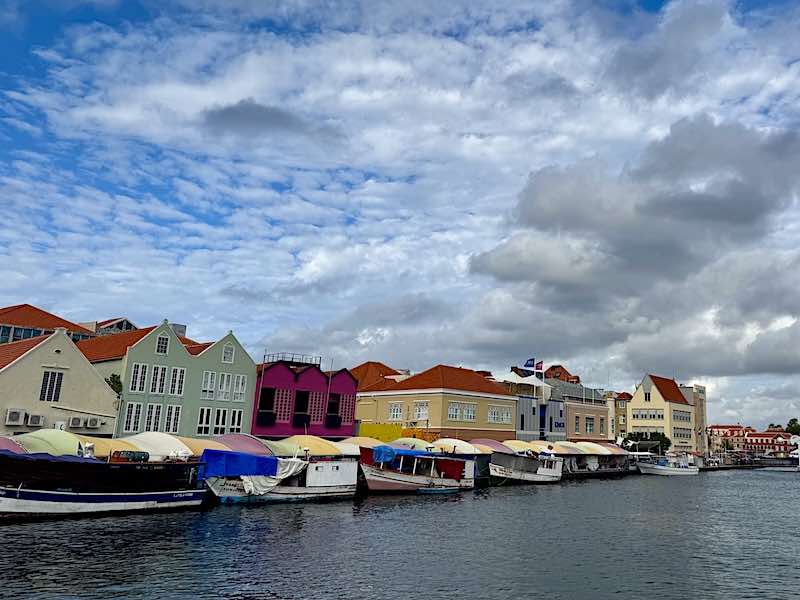
The boats of the Floating Market located on Sha Caprilleskade
At the end of the Handelskade, the tour proceeded towards the Waaigat inlet, passing the Floating Market located on Sha Caprilleskade, where Venezuelan vendors offer fish and vegetables from their boats.
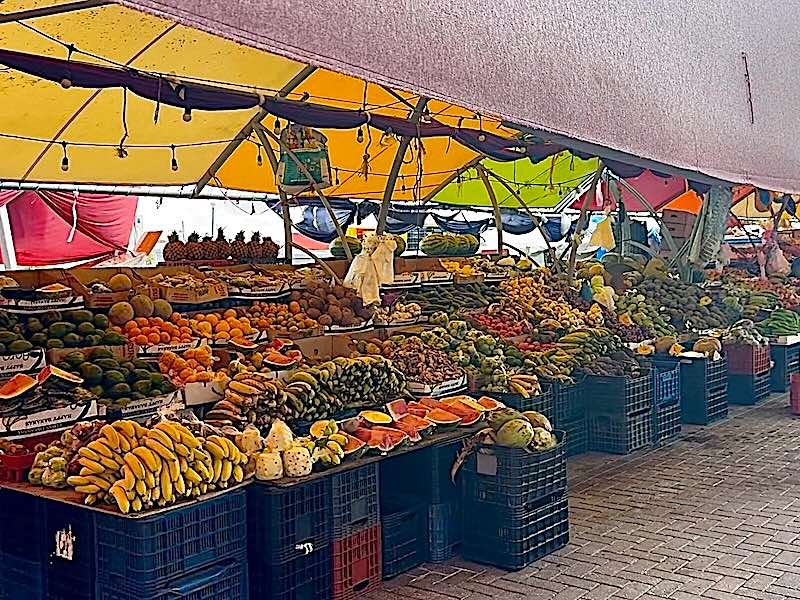
Fresh fruits and vegetables for sale at the Floating Market located on Sha Caprilleskade
Upon crossing the Queen Wilhelmina Bridge (Koningin Wilhelminabrug) into the Scharloo district, we came across the residence of the artist Francis Sling, adorned with a romantic nature theme. The artwork on his home, titled “3 o’clock Romance,” narrates the tale of two birds that encounter each other on a tree branch. Curaçao has long been renowned for its vibrant private house facades.
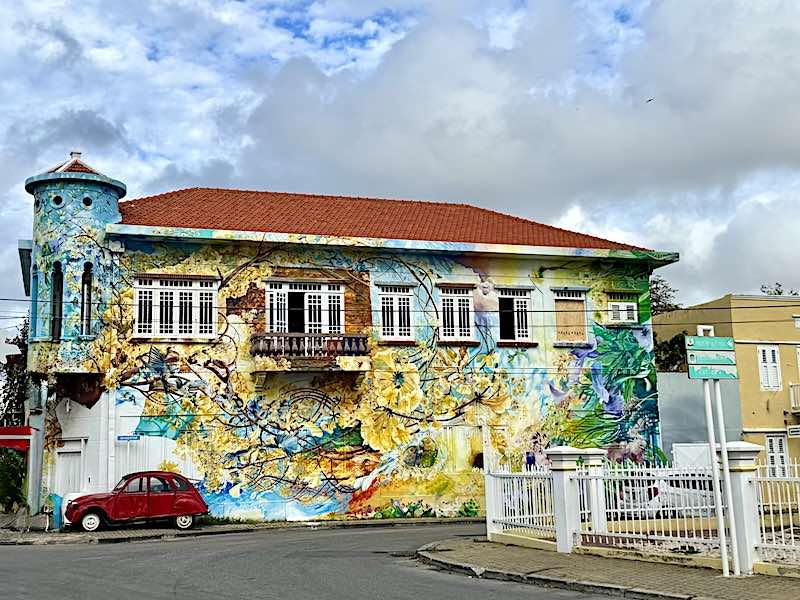
The painted residence of the artist Francis Sling in the Scharloo district
Scharlooweg street serves as the primary thoroughfare of the Scharloo district. It underwent a transformation from a failed plantation in the 17th century to become the island’s most esteemed “millionaire’s row” during the late 1800s. Today, it is recognized as a noteworthy UNESCO World Heritage site due to its collection of lavish Baroque and Neoclassical mansions constructed by affluent merchants.
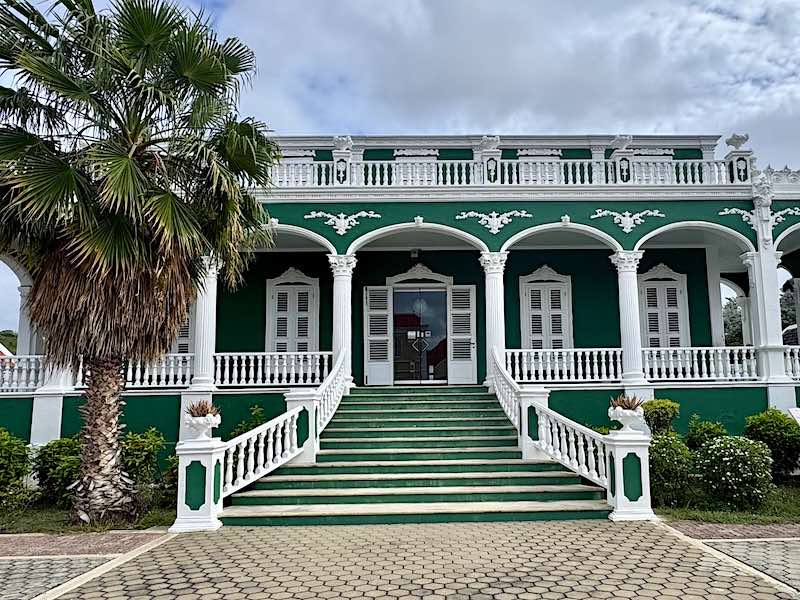
The Bolo di Bruit mansion, famously referred to as the “Wedding Cake” house along Scharlooweg street
The tour made a stop at Bolo di Bruit, famously referred to as the “Wedding Cake” house, which is the most photographed building in the city and also the location of the Central Historical Archives.
We also observed a range of mansions that had been meticulously restored, including a private bank located at #31 Scharlooweg street (established in 1897) and the historic, grand residence at #65 Scharlooweg street. It appeared that numerous buildings now house businesses that have assumed responsibility for preserving these historic structures.
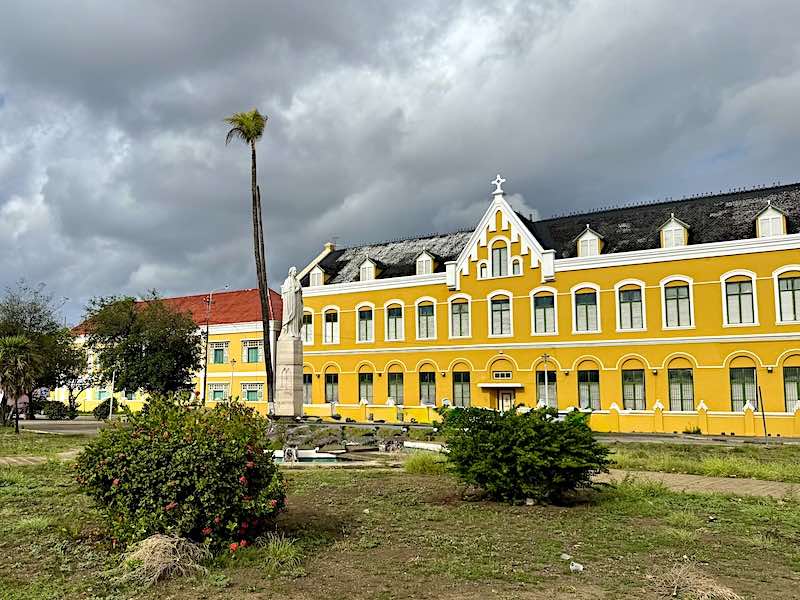
Historic buildings along the Julianaplein, named in honor of Queen Juliana
After our short pass through Scharloo, we proceeded towards a small square known as Julianaplein, named in honor of Queen Juliana. Surrounding this square were historic structures, including the former Dominican church and the clergy house.
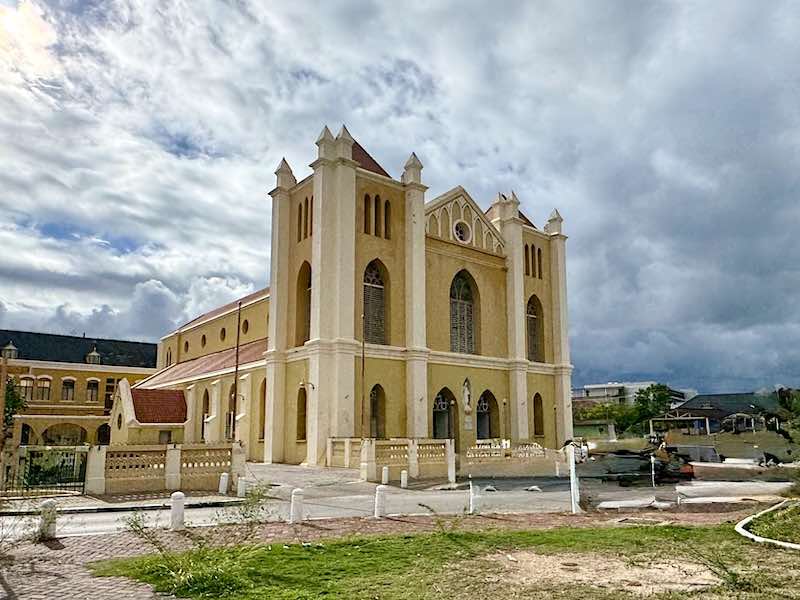
The Pietermaai Cathedral, the largest and most impressive church on the island
Our next destination was the Pietermaai Cathedral, recognized as the largest and most impressive on the island. A few city blocks away, we also discovered the Mikve Israel Emmanuel Synagogue. Consecrated in 1732, it holds the distinction of being the oldest synagogue in continuous operation in the Western Hemisphere. Nearby was Queen Wilhelmina Park, a venue that is frequently utilized for cultural events and features a large Chichi statue.
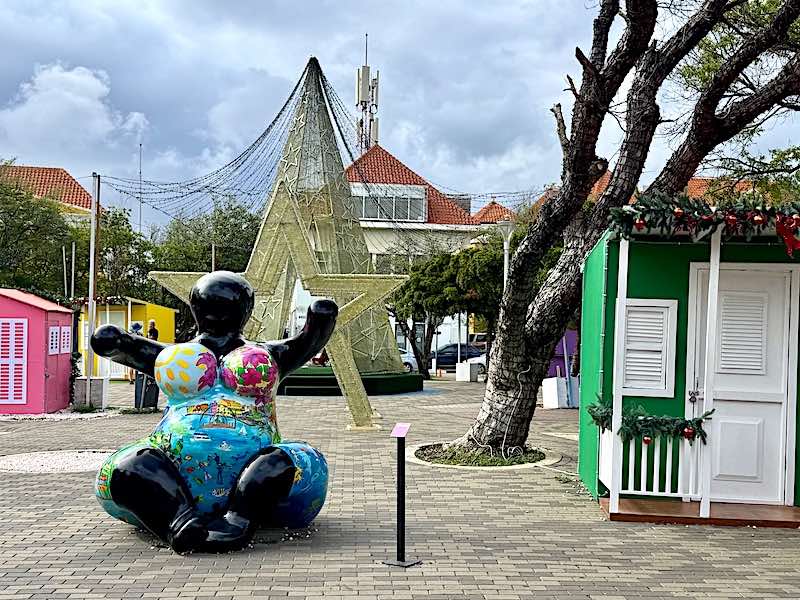
A large Chichi statue in Queen Wilhelmina Park
Chichi statues in Curaçao are renowned, vividly colored sculptures that embody the concept of the big sister: a strong, nurturing, and responsible eldest female sibling within Caribbean culture. Originally crafted by German artist Serena Israel in 2008, these curvaceous, hand-painted figures represent love and community. Chichi statues are found throughout Curaçao and have become a beloved artistic representation of local heritage. Chichi dolls are a prized souvenir that many people take home to remind them of their visit to Curaçao.

Queen Wilhelmina Park, a venue that is frequently utilized for cultural events
Dominating the waterfront behind Queen Wilhelmina Park is the ‘Tempel’, which was constructed between 1865 and 1867 by the Dutch Reformed Israeli Community. In 1995, the Tempel was handed over to the Curaçao Monuments Foundation, which undertook the restoration of the building that currently accommodates the Council for the Prosecution.
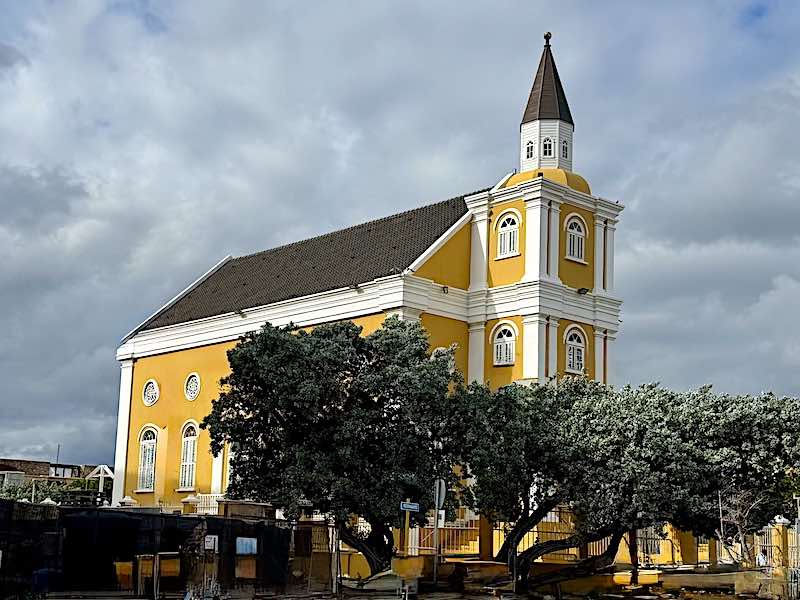
The Tempel, completed in 1867 by the Dutch Reformed Israeli Community
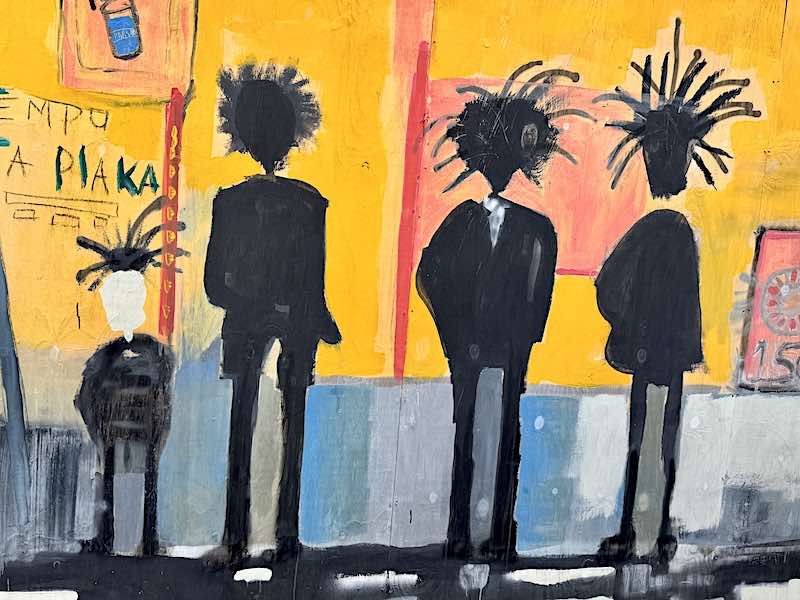
Mural-style paintings created by local artists in the Waterfort Arches
In this part of the city, structures were erected within and around various sections of Fort Amsterdam. We passed by the Waterfort Arches, a formidable fortress that served as the location for the Willhem III Barracks. Some sections of the arches feature mural-style paintings created by local artists.
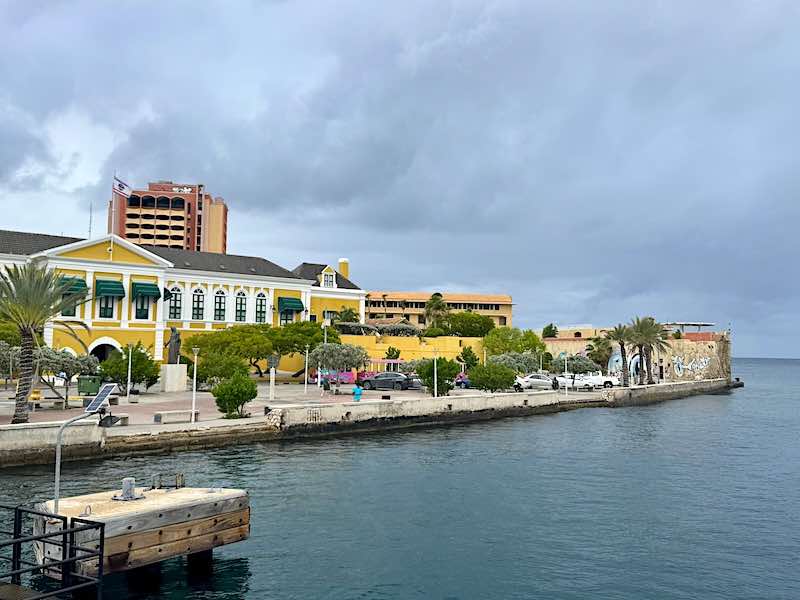
Fort Amsterdam at the entrance to Sint Anna Bay
Forts, Churches, and City Landmarks
Our tour came to an end at the walls of the first structure erected in Willemstad, Fort Amsterdam. Initially built in 1635 to protect the crucial entrance to the harbor from hostile vessels, this fortification was originally intended to accommodate the director of the West-Indian Company along with the troops, the garrison’s church, storage facilities, and water reservoirs.
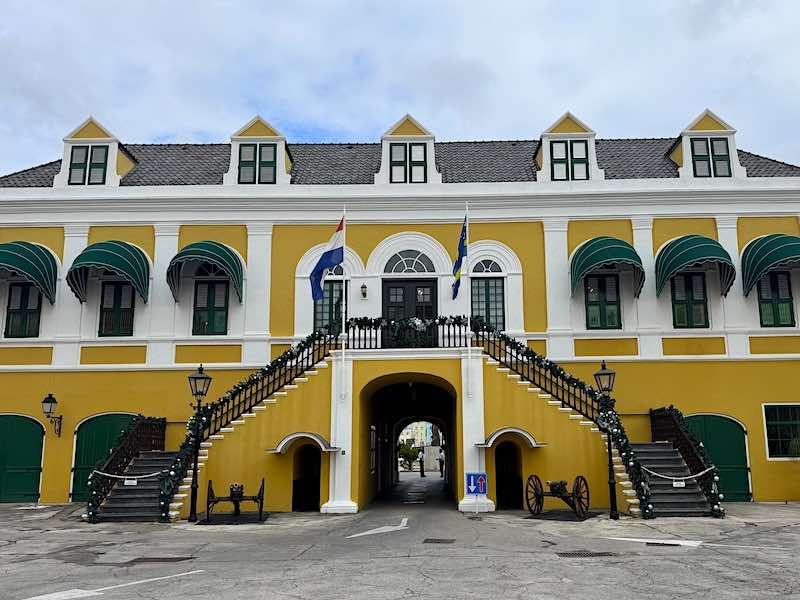
The grand entrance to the Governor’s Palace at Fort Amerstam
As time progressed, the fortress was transformed into the Governor’s Palace and the office of the Central Government of the Netherlands Antilles. In 1868, renovations were undertaken on both the front and back façades of the old Government House to impart a distinctly neoclassical appearance.
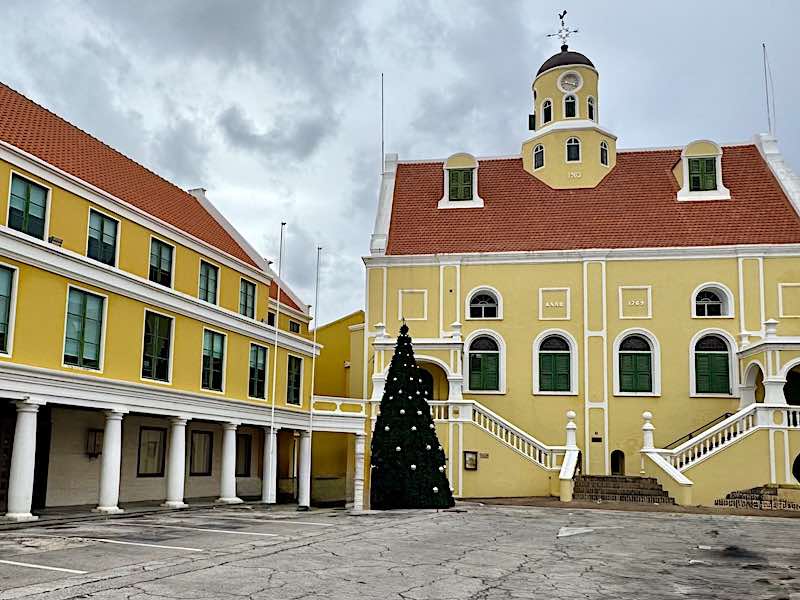
The entrance to Fort Church located within the walls of Fort Amsterdam
Within the courtyard of Fort Amsterdam, we observed Curaçao’s oldest Protestant house of worship, Fort Church. The structure began construction in 1763 and was completed in 1771, even though, for some unknown reason, the words “Anno 1769” are on the façade. A remarkable feature is an English cannonball that remains lodged above the left entrance, a remnant from an attack in 1804. Additionally, another significant structure is the neoclassical Council of Ministers, constructed between 1857 and 1858. Previously serving as an arsenal and officers’ residence, the Council of Ministers of the Netherlands Antilles has been operating from this location since 1957.
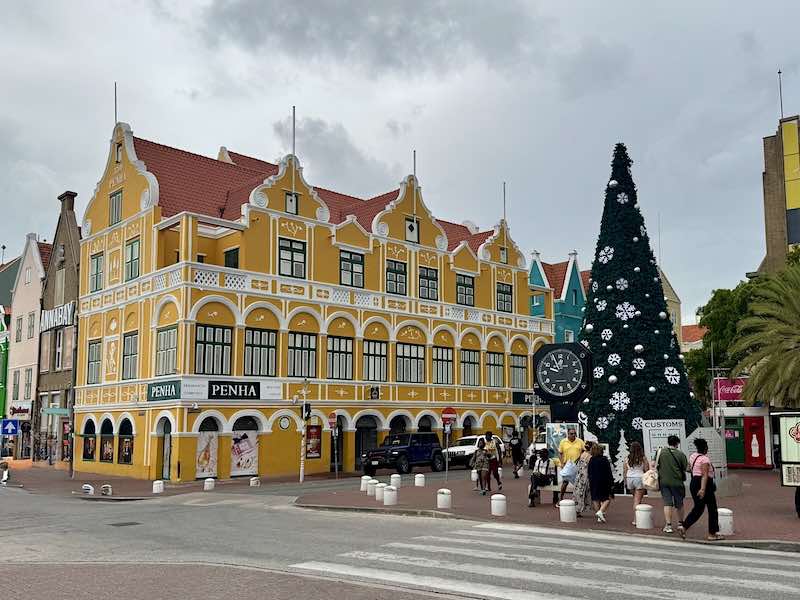
The PENHA building displaying Curaçao’s 18th century baroque style
At the conclusion of our trolley tour, my travel group wanted more, so we walked to see additional city sights on our way back to our ship. This included admiring the Christmas decorations along Breedestraat. The most prominent structure we observed was the PENHA building, which was originally built as a merchant’s residence between 1708 and 1733. This building exemplifies Curaçao’s baroque style, prevalent on the island in the 18th century, featuring arches on both the ground and first floors, as well as gable tops reminiscent of Dutch architecture.

Briónplein (Brión Square), the center of the Otrobanda district
At the intersection of Breedestraat and Handelskade, situated by the waterfront, is the Punda entrance to the Queen Emma Bridge. A leisurely walk across the bridge brought us to the Otrobanda district and Briónplein (Brión Square), which was named after Felipe Luis Brión Detrox, a military officer originally from Curaçao. He participated in the Venezuelan War of Independence and achieved the rank of admiral in both the Venezuelan navy and the former Republic of Colombia.
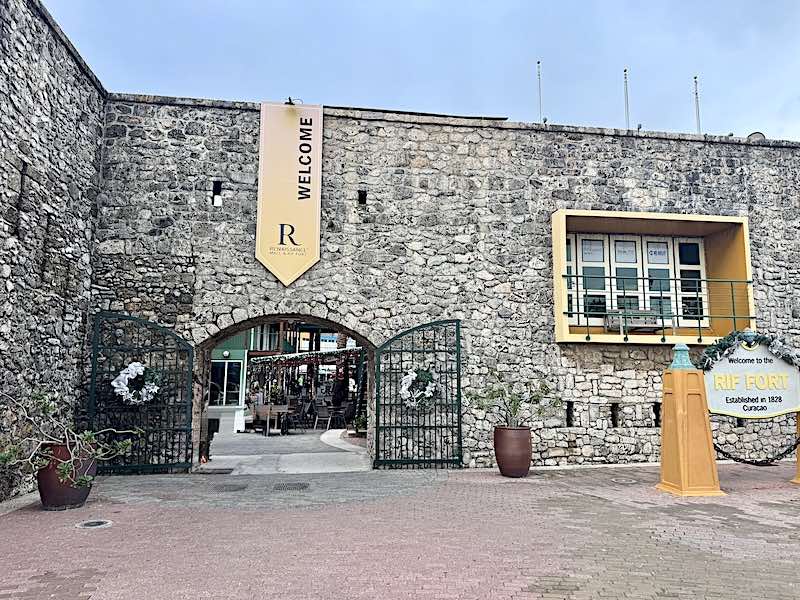
The main gate entrance to Rif Fort
Otrobanda and Rif Fort
A must-visit destination in the Otrobanda district is the Kura Hulanda Village and Museum, which consists of a museum, hotel, and small shops, cafes, and restaurants. Most of the structures within the Kura Hulanda area are designated as protected monuments. This revitalized historic zone in Otrobanda encompasses approximately 8% of the historic district and showcases a substantial museum that primarily emphasizes the history of slavery, along with African art and culture. Spanning nearly three centuries in its construction, there are around 25 monuments that exhibit a diverse range of architectural styles.
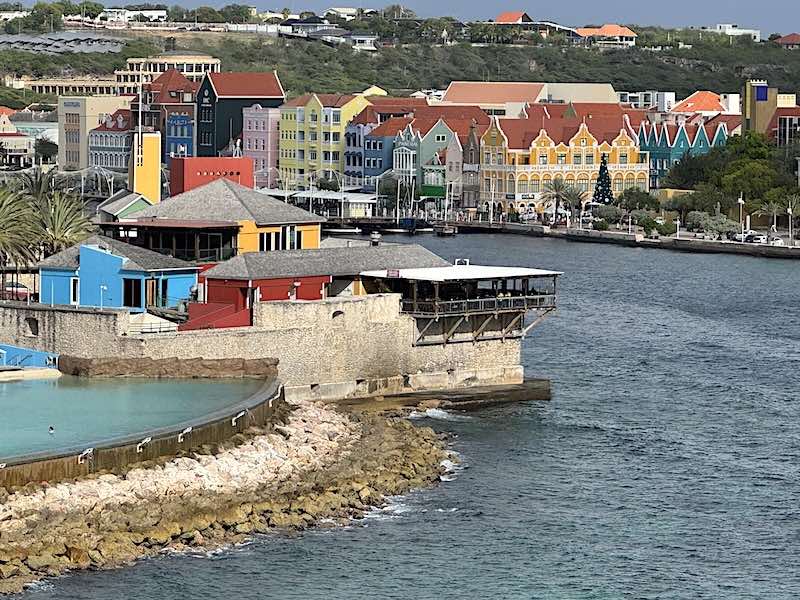
Rif fort as seen from the entrance to Sint Anna Bay
As the weather became threatening, we proceeded to the cruise port, yet took a moment to explore the coastal Rif Fort, which was built between 1826 and 1828. This fort features a wall that is 16 feet (5m) high and 8 feet (2.5m) thick, along with 26 gun casements. Although the fort never engaged in combat, it was repurposed at the start of the 20th century as a telegraph station and for various other technical public services. In the year 2000, Rif Fort underwent restoration and now houses a contemporary shopping and entertainment complex.

Colorfully painted commercial buildings along the Julianaplein
Why Willemstad Stands Out
There are many factors to consider when choosing a Caribbean cruise itinerary. One of the primary considerations should always be the ports of call. Most islands in the Caribbean offer comparable recreational activities. Additionally, many islands feature similar beach and natural attraction experiences. Personally, I am particularly attracted to islands that showcase distinct cultures, traditions, and architectural styles. Willemstad, Curaçao, is a destination worth exploring due to its exceptional combination of lively Dutch colonial history and Caribbean ambiance, particularly evident in its UNESCO World Heritage historic districts.
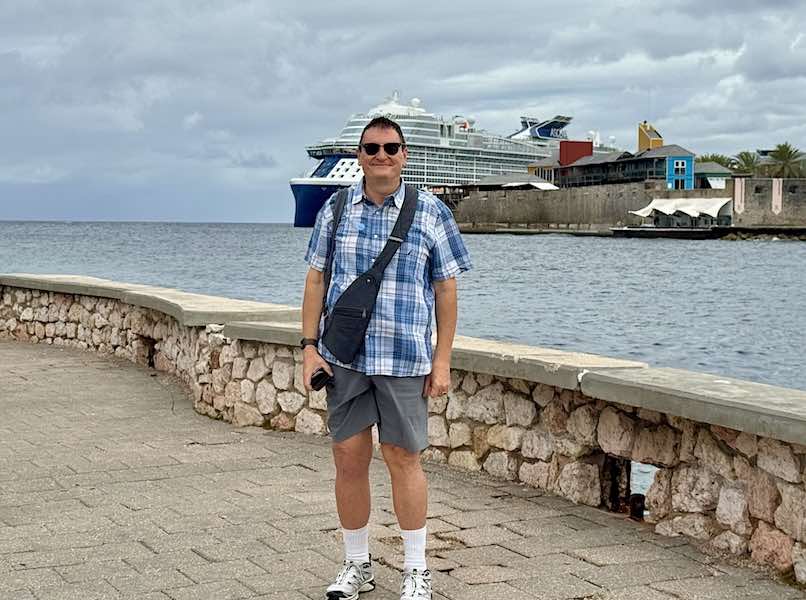
The author standing in front of Sint Anna Bay and Rif Fort
Today, a stroll through the Willemstad historic district will give you a distinct European atmosphere set against a Caribbean backdrop. Although the vividly painted structures in Punda were initially built to showcase the affluence of the European elite, they have today become the city’s primary tourist attraction. The most enjoyable aspect of touring Willemstad is that you can immerse yourself in this experience simply by disembarking from your cruise ship and walking into the heart of one of the most extraordinary cities in the Caribbean. Whether you opt to discover Willemstad on foot, via bus, or aboard a tourist train, it is certainly worthwhile to seek out a cruise itinerary that features this Southern Caribbean city.