
Blog
‘We are not like the rest of the Andalucía’: the rugged charms of Almería, Spain’s desert city | Andalucia holidays

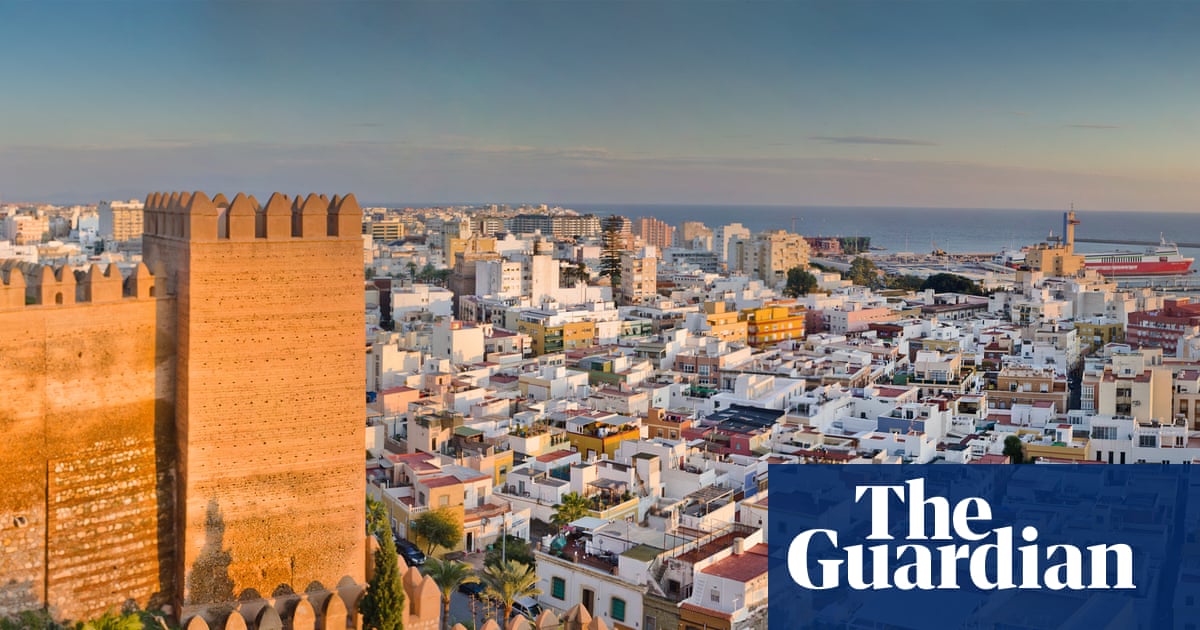
Perched high on the battlements of Almería’s 10th-century Alcazaba, looking over the mosaic of flat roofs tumbling down to the sea, I’m reminded of author Gerald Brenan’s travel classic South from Granada, and his impression upon arriving in Almería in 1920: “Certainly, it seemed that the sea was doubly Mediterranean here, and the city … contained within it echoes of distant civilisations.”
A British adventurer, Hispanist and fringe member of the Bloomsbury group, Brenan had walked to Almería from where he was living near Granada, apparently to buy extra furniture in preparation for a visit from Virginia Woolf and friends. A century later, my journey here in a 30-year-old van from London is somewhat less notable, but as I marvel at the almost surreal incandescence of the Med, and the maze of ancient streets below me, I too am aware of a sensation of time travel.
Brenan would have been a novelty visitor back then. And even today, unlike Málaga, just a couple of hours down the coast, Almería is little visited by international tourists, although the similarities between the two cities are striking. Both are ancient ports of beguiling tree-lined streets, a sparkling beach, a Moorish fort, and a 16th-century cathedral, yet Almería has so far remained under the radar, while Málaga is battling the effects of overtourism. Almería is reminiscent of the old Málaga, before its 1990s makeover, when its reputation as a sketchy port city was transformed by major investment and the overhaul of its waterfront into a soulless shopping and eating development.
Almería is 120 miles east along the coast, in Spain’s impoverished southeastern corner, in Europe’s only desert, and on the edge of the continent. Closer to Morocco than Madrid, it feels like an outpost. There is a tangible sense of being far away from the action – and the funding – but with a new high-speed rail service incoming from Madrid in 2027, and the development of the docks over the next few years to accommodate luxury cruise-ships, including green space, its status as the rough diamond of Andalucía may be about to change.
For now, Almería remains a living, working port, unpretentious in its charm, where ornate but gently crumbling townhouses sit alongside faded mid-century shopfronts, and the tang of diesel and fish in the salty air remind you that its waterfront is strictly for business. While Málaga’s port is now a top destination for superyacht spotting, the main purpose of Almería’s docks is as a ferry terminal for services to Algeria and Morocco. The border feels porous here, the nearby streets more like an extension of north Africa, with signs in Arabic advertising ferry tickets, stores offering Moroccan tea glasses and a handful of African fishers mending nets.
If you don’t mind the walk out of town, through a truck-park wasteland of sun-bleached concrete warehouses, you’ll be rewarded by a sumptuous seafood feast at bar 900 Millas, a genuine hideaway, wedged between loading bays, serving fresh catches from the adjacent fish market. Come at 4am on a weekday for breakfast with the fishers, or join the Almeríenses, dressed to the nines for Sunday lunch.
We stayed in the serene Hotel Catedral, a 19th-century palatial house in the centre of town on the pedestrian Plaza de la Catedral. Its rooftop bar offers close-up views of the cathedral and across to the partly restored Alcazaba, illuminated every night in its hilltop setting.
Wherever you wander in Almería, the Alcazaba looms above. Under the clean Mediterranean sunlight, its cool stone walls, cypress and palm trees, and gardens of flowing water channels provide a haven of rosemary-scented tranquillity. If you’ve ever been herded around Granada’s Alhambra in a strict time slot, a morning at Almería’s Alcazaba is the antidote. Entry is free to European citizens (including Britons), and you can explore at leisure, taking in the spectacular 360-degree views, from the arid mountains behind, to the glittering sea and the narrow streets of La Chanca, the city’s historic Arab quarter, below.
Historically home to Gypsies and fishers, La Chanca plays a significant role in Almería’s identity. A jumble of cave homes and tiny houses, tumbling down the hill to the docks, by turns rough and romantic, it served as a source of inspiration to the Movimiento Indaliano, an avant garde artistic and cultural collective that emerged here after the second world war. A permanent collection of the movement’s paintings, many featuring scenes and the people of La Chanca, is displayed at the Doña Pakyta art gallery in the city centre, providing a captivating insight into mid-century Almería.
Near the Alcazaba, the Moroccan cafe Teteria Almedina serves hot mint tea and chilled mint lemonade on a verdant terrace. In the old town, there are tapas bars at every turn, always packed. At Casa Puga, one of Almería’s oldest tapas bars, you’ll be lucky to squeeze through the door, let alone get a seat. Almería is one of Europe’s sunniest cities, where a four-hour siesta is adhered to like a religion (don’t try to get anything done in the afternoon), and the weekend is devoted entirely to socialising. As we wander from heaving plaza to heaving plaza, I’m envious of this fierce dedication to leisure. There is a pleasing sensation of the 20th-century’s analogue ways still holding sway.
Almería, the city and the province, is an outlier, not just geographically, but also spiritually, says José Antonio González Perez, of the local tourist office: “We are not like the rest of Andalucía. We have our own dialect, our own cuisine. But for a long time, we have been forgotten.”
This spirit of independence is tangible in the pride shown in Almería’s cultural heritage. The fascinating guitar museum celebrates the expert luthier Antonio de Torres Jurado, considered to be the father of the modern guitar, who was born and died in the city. The cinema museum and a walking trail reveal the locations of the many films that have been shot in the city and the surrounding desert, including Sergio Leone’s spaghetti westerns, Indiana Jones and the Last Crusade, and Lawrence of Arabia. There’s even a Russ Meyer-inspired bar, La Mala, tucked away down a side alley.
For a small city Almería’s nightlife and creative spirit are strong. The ever-busy Picasso bookshop is an institution, with a full diary of author events; Paseo79 sells affordable works by local artists; and local music collective Clasijazz has transformed hundreds of lives with its grassroots conservatoire, dedicated to training young musicians, running jam sessions, and putting on gigs.
While Almería boasts its own 2-mile urban beach, it also makes a perfect base for exploring the wilder coast of this corner of Andalucía, and the Cabo de Gata-Níjar natural park. This 180 sq miles of wilderness is Europe’s only desert, hence its role in doubling for the American west in so many films. Its beaches are unspoiled by development, with just a scattering of tiny white villages nestled in coves, their swaying palm trees and bursts of red, pink and purple bougainvillaea mirroring the coast of north Africa across the water. Inland, the Sierra Alhamilla and the ancient Moorish village of Níjar in the foothills, known for its handicrafts including traditional glazed ceramics and jarapas (Andalucian woven rugs), are worth a visit too.
When Gerald Brenan arrived in Almería, his impression was of “a bucket of whitewash thrown down at the foot of a bare, greyish mountain. A small oasis …” He only intended to buy furniture and head back, but while waiting for money to be wired, he became embroiled with a local rascal who led him astray, into the fleshpots and seafarers’ drinking dens. It clearly made an impression on him, as he continued to be drawn back to Almería over the years, describing it as a “poetic” city with a “lost”, “forgotten” atmosphere. He said it produced an excitement in him he had not felt in other Spanish cities. As someone who has been exploring Spain for many years, I know exactly what he means.
For more information visit turismodealmeria.org