
Blog
A Decision Framework for Middle East Destination Recovery


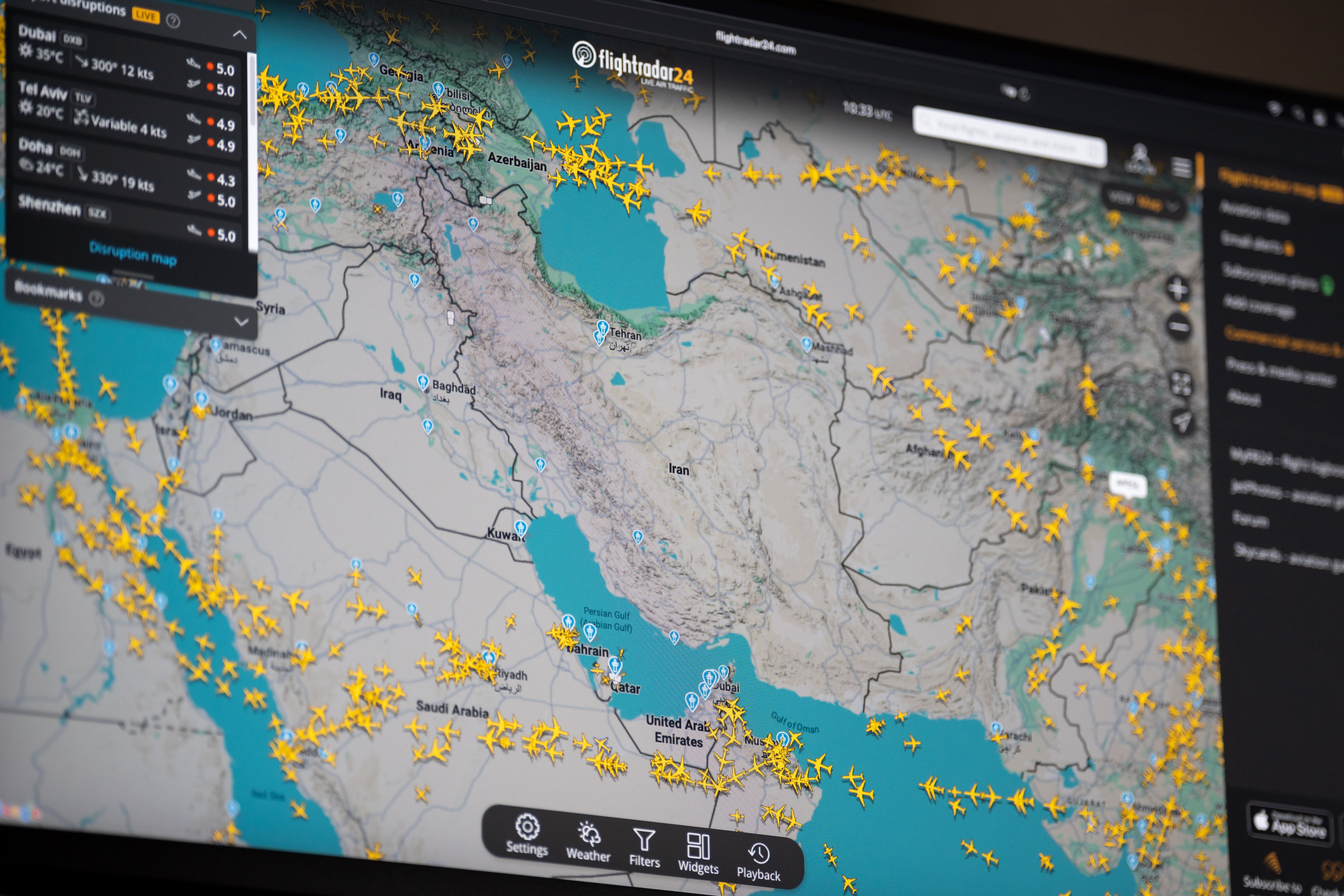
The first casualty of war is not truth; it is the booking engine. Within hours of Iran’s retaliatory strikes, the cascade began: airspace closures, government travel advisories, corporate freezes, and hotel cancellations piling up across Abu Dhabi, Dubai, Riyadh, and Sharm El-Sheikh.
Travel is a confidence industry. Confidence is in short supply. But volatility is not collapse — and a demand shock, however severe, is different from the structural unravelling of the destination brands that the UAE, Saudi Arabia, Egypt, Jordan and the wider Middle East have spent years and tens of billions of dollars constructing.
This is a two-part Skift analysis. Part I assesses the immediate damage to bookings, perception, and brand equity. Part II examines the two-to-four-year recovery arc.
The Perception Problem
The operational damage — rerouted corridors, soaring war-risk insurance premiums, schedule rewrites, suspended codeshares — is visible and will resolve on a known timeline. The second-order effect is the one that will haunt destination marketing offices for months: the perceptual contamination of an entire regional bloc.
Consumers do not parse geopolitical complexity. They make snap judgements. The snap judgement forming in living rooms from Atlanta to Manchester to Zurich is brutally simple: the Gulf is dangerous. Never mind nuance. The headline wins every time.
Skift’s latest brand health modelling reveals stark asymmetry in how different markets will respond. Among UAE domestic consumers, destination familiarity runs at 84–97%. Among German, Italian, or Spanish consumers, Brand Health Index scores sit below 16. Fewer than one in twenty can name a specific itinerary hook. Conflict doesn’t erode brand equity in these markets. It confirms a vacuum.
Shallow familiarity is the brand’s Achilles heel in a crisis. Markets that barely know a destination will walk away from it at the first headline.
The United Kingdom occupies a middle tier: a BHI of 21.4 and 48% UAE destination familiarity means British consideration will dip but not collapse. Travelers will defer rather than cancel, demanding maximum flexibility. France, Italy, Spain and Poland form a cluster of high-vulnerability, lower-familiarity markets. Their BHI scores — 14.9 (Spain) to 18.0 (France, Poland) — signal thin brand foundations that regional instability will further hollow out.
FIGURE 1: BRAND VULNERABILITY INDEX BY SOURCE MARKET
Short-term consideration drop and brand resilience by source market for UAE destinations (Abu Dhabi, Dubai and Ras Al Khaimah)
| Source Market | Skift Brand Health Index (BHI) | UAE Familiarity (2025) | Est. Consideration Drop (Short-Term: March to June 2026) | Resilience Rating |
| UAE Domestic | 38.8 | 84–97% | –5 to –8% | ★★★★★ |
| India | 30.5 | 44–78% | –10 to –15% | ★★★★ |
| United Kingdom | 21.4 | ~47% | –18 to –24% | ★★★ |
| France | 18.0 | ~25% | –25 to –32% | ★★ |
| Italy | 16.0 | ~22% | –27 to –33% | ★★ |
| Spain | 14.9 | ~20% | –28 to –34% | ★★ |
| Poland | 18.0 | ~18% | –26 to –32% | ★★ |
| Germany | 15.3 | ~22% | –28 to –35% | ★ |
| China | ~12* | ~5–8% | –28 to –35% | ★ |
Source: Skift analysis using Skift Destination Brand Health Study, 2025 Q4 Wave (n=1,000 to n=2,000 per source market).
Judged as a Bloc
The entire Gulf arc, from the Strait of Hormuz to the Red Sea coast, is now live operational territory in the Western traveler’s mental map. Qatar, Bahrain, and Oman have suffered direct infrastructure strikes. The UAE and Saudi Arabia are actively impacted. The collective punishment is not a perceptual injustice this time. It is a perceptual fact.
Jordan is the clearest victim of association rather than exposure. Its brand health momentum — a BHI of 40 globally, strong European growth trajectory — will be interrupted not because Jordan is unsafe, but because “Middle East” in a news banner overrides rational destination thinking. When a traveler in Stuttgart sees the headline, the granularity of Jordan versus Qatar is irrelevant.
Saudi Arabia faces a distinct challenge. Its Vision 2030 tourism narrative is compelling and well-funded, but impression-sensitive even in calm conditions. Skift’s analysis reveals a structural vulnerability: the top two spending cohorts, representing 45% of trips and 52% of total spend, are precisely those with the greatest optionality. They will defer, not cancel. But in Saudi’s case, deferral is not a neutral act. It freezes a brand-building cycle that depends on first-time visitation to convert awareness into advocacy. A repeat visitor becomes an advocate. A deferred first timer becomes a missed foundation. You cannot build a reputation you have not yet earned.
Egypt carries the most structural vulnerability — thinner Western brand equity, price-competitive positioning that leaves less room to absorb yield compression, and chronic proximity-to-conflict perception. Oman is the most paradoxical case: it had built the region’s strongest ‘peaceful sanctuary’ positioning through decades of studied neutrality, and that foundational brand promise has now been violently erased.
How Travelers Will Respond
Based on Skift’s segmentation models and analogous historical disruptions — the Gulf War (1990–91), the Arab Spring (2011–13), COVID-19’s aviation collapse (2020) — four behavioral responses are near-certain:
Booking compression. Lead times collapse. Travelers demand close-to-departure flexibility. Rigid inventory sits unsold.
Packaging preference. Risk-averse travelers retreat to trusted brands: major hotel groups, established OTAs, IATA-certified carriers. Independent and boutique operators face disproportionate pressure.
Luxury recovery precedence. High-income travelers with repeat Gulf experience return faster than first-time European tourists. Risk tolerance correlates with income, repeat visitation, and cultural familiarity.
VFR and diaspora resilience. Indian, Pakistani, Filipino, and Arab diaspora travel functions as a structural demand floor. It does not respond to travel advisories the way recreational European tourism does.
Luxury rebounds first. VFR holds the floor. The European leisure segment is the last to return, and the first to forget why.
The Hierarchy of Resilience
Dubai and Abu Dhabi carry the deepest reservoirs of global familiarity, functional trust, and aspirational pull. Structural recovery mechanisms — carrier capacity, infrastructure, mega-events pipeline — are robust. Expect a V-shaped recovery.
Ras Al Khaimah enters mid-growth. Strong UAE and India domestic momentum, but shallow European awareness. The impact is an interruption to a build, not a reversal. The risk: momentum loss extends the European penetration timeline by 12–18 months.
Saudi Arabia faces its most significant Western-market perception test since Vision 2030 launched. Fundamentals remain intact. But European and North American decision-makers will apply heightened risk premia, and corporate travel will remain cautious longer.
Egypt’s Red Sea resort circuit, heavily dependent on Central and Eastern European charter traffic, is particularly exposed. Price-competitive positioning and chronic association risk compound the challenge.
Qatar, Bahrain, and Oman face reconstruction challenges, both literal and reputational. Jordan risks its hard-won European pipeline freezing at a critical juncture.
FIGURE 2: ILLUSTRATIVE DEMAND RECOVERY CURVE | GULF DESTINATIONS POST-CONFLICT
Indexed demand recovery trajectory by destination tier (Conflict = Month 0)
| Destination | M0 (Conflict) | M+1 | M+3 | M+6 | M+12 |
| Dubai | Index 100 | 74 | 86 | 94 | 106 |
| Abu Dhabi | Index 100 | 72 | 83 | 92 | 103 |
| Ras Al Khaimah | Index 100 | 67 | 78 | 87 | 97 |
| Saudi Arabia | Index 100 | 62 | 72 | 81 | 93 |
| Qatar | Index 100 | 55 | 65 | 74 | 85 |
| Bahrain | Index 100 | 57 | 66 | 75 | 86 |
| Oman | Index 100 | 52 | 63 | 73 | 84 |
| Kuwait | Index 100 | 65 | 74 | 82 | 91 |
| Egypt | Index 100 | 56 | 65 | 74 | 86 |
| Jordan | Index 100 | 61 | 70 | 79 | 90 |
Sources: Skift modelling; informed by Skift’s Longitudinal Destination Brand Health Study (2018–2025 waves) and historical analogue conflicts (Gulf War 1990–91, Arab Spring 2011–13, COVID-19 aviation shock 2020). Green = near-full recovery (90+); amber = partial recovery (75–89); red = significant deficit (<75).
Structuring the Recovery Decision
Diagnosis without decision architecture is expensive commentary. The analysis above maps the damage. What follows is the structure through which destination leaders should organize their response — not as a checklist, but as a decision system that adapts to how the conflict evolves.
The Three Scenarios That Determine Everything
Every decision a destination marketer, hotel revenue director, or airline network planner makes in the next ninety days depends on a single variable they cannot control: how long the disruption lasts. The mistake most recovery plans make is assuming a single trajectory. The correct approach is to plan for three, with clear triggers that tell you which scenario you are in and when to shift strategy.
FIGURE 3: SCENARIO PLANNING MATRIX
| Scenario A: Contained Episode | Scenario B: Extended Disruption | Scenario C: Structural Shift | |
| Duration | Ceasefire within 30 days; airspace normalizes within 45 | Active hostilities or airspace restrictions persist 60–120 days | Conflict becomes semi-permanent; regional security architecture changes |
| Key trigger | Diplomatic resolution; insurance premiums begin normalizing | Second wave of strikes or new front opens; carrier schedules cut further | Sustained military posture; permanent travel advisory upgrades from 3+ Western governments |
| Brand impact | Temporary perception dip; equity intact for high-familiarity destinations | Active erosion in low-familiarity markets; MICE pipeline damage | Structural reset of regional positioning; 3–5-year recovery timeline |
| Recovery shape | V-shaped (Dubai, Abu Dhabi); U-shaped (others) | U-shaped (UAE); L-shaped risk (Egypt, Jordan) | Brand rebuilds required; some destinations face permanent repositioning |
Source: Skift analysis. Triggers are illustrative and should be calibrated to each destination’s specific source market exposure.
The critical discipline is not choosing a scenario. It is defining in advance which observable signals will tell you the scenario has shifted. A destination that builds its response around Scenario A but has no tripwire for recognizing it has entered Scenario B will be caught flat-footed precisely when the stakes are highest.
Recovery Sequencing: Four Phases, Not Three Bullet Points
Recovery from a geopolitical demand shock is a sequence, and the sequencing is where most destinations get it wrong. Launching consumer campaigns before safety perceptions have been credibly addressed wastes budget and signals desperation to precisely the premium segments that will return first.
Skift’s analysis of analogous disruptions reveals a consistent four-phase architecture. The phases are sequential. Skipping or compressing them correlates with slower overall recovery.
FIGURE 4: RECOVERY PHASE SEQUENCING
| Phase | Objective | Key actions | Common mistake |
| Phase 1: Operational confidence | Restore trust in physical safety and logistics | Government-to-government safety signaling; airline schedule restoration; insurance normalization tracking | Jumping to consumer marketing before operational signals are clear |
| Phase 2: Trade reactivation | Re-engage distribution partners and corporate travel managers | Tour operator confidence briefings; corporate travel policy updates; MICE rebooking with flexibility guarantees | Ignoring the trade layer; trade controls group and corporate volume |
| Phase 3: Segment activation | Reactivate highest-resilience segments first | Luxury repeat visitors; VFR/diaspora; adventure travelers with prior regional experience | Generic destination campaigns instead of segment-specific activation |
| Phase 4: Broad market re-entry | Rebuild consideration in low-familiarity markets | European leisure campaigns; first-time visitor acquisition; media hosting programs | Treating all source markets on the same timeline |
Source: Skift modelling based on longitudinal destination brand health data (2016-2025) and historical conflict recovery analogues.
Phase durations vary by scenario. Under Scenario A, the full sequence compresses into three to five months. Under Scenario B, Phase 1 alone may consume sixty days, and Phase 4 may not begin for six to nine months. Under Scenario C, Phase 4 requires fundamental brand repositioning rather than simple reactivation.
Source Market Triage: Where to Spend, Hold, and Freeze
The temptation in a demand shock is to maintain presence across all source markets or to cut uniformly. Both are wrong. The BHI data provides a principled basis for triage: calibrate spend to each market’s recovery potential, which is a function of pre-crisis brand depth, operational connectivity, and segment composition.
FIGURE 5: SOURCE MARKET TRIAGE FRAMEWORK (ILLUSTRATIVE: UAE DESTINATIONS)
| Triage category | Market characteristics | Budget guidance | Illustrative markets |
| Accelerate | BHI > 50; strong VFR/diaspora floor; direct carrier connectivity intact | Maintain or increase spend; activate Phase 2–3 immediately | India, GCC domestic, UK (for Dubai) |
| Hold | BHI 20–50; moderate familiarity; some direct connectivity | Baseline presence; shift to retention messaging; prepare Phase 3 assets | UK (for Abu Dhabi, RAK), Germany, select East Asian markets |
| Freeze | BHI < 20; shallow awareness; low connectivity; high cultural barrier | Suspend acquisition spend; reallocate to Accelerate markets; resume at Phase 4 | France, Spain, Poland, Italy (for most Gulf destinations) |
Source: Skift framework. BHI thresholds and market assignments are illustrative; calibration requires destination-level analysis.
Do not spend money trying to rebuild consideration in markets where you had barely built it. Those markets will be last to return regardless. Redirect to markets where the brand foundation supports accelerated recovery.
The Segment Activation Sequence
The recovery flywheel: diaspora and VFR traffic holds the operational floor (airlines maintain frequencies, hotels keep rooms turning). Luxury repeat visitors return next, generating high-yield revenue that funds continued marketing. Their visible return creates the social proof that unlocks mid-market first timers. The broad European leisure segment re-enters last, often eighteen to twenty-four months after the initial shock.
The activation sequence should mirror this cascade. Spending Phase 3 budgets on broad European awareness while the luxury segment has not yet been reactivated is sequencing money ahead of psychology.
What This Framework Does Not Prescribe
Frameworks structure decisions. They do not make them. The architecture above does not provide — because it requires destination-specific calibration — the populated version: which specific BHI thresholds apply to your portfolio, what your budget reallocation should look like given contractual commitments and carrier partnerships, how your mega-events pipeline interacts with recovery phases, what your competitive positioning should be relative to other Gulf destinations pursuing the same segments, or how to sequence a brand rebuild if Scenario C materializes.
The diagnosis in Part I, combined with the decision architecture above, provides the strategic scaffolding. The populated version — specific to your destination, your markets, your competitive set, and your budget reality — is what distinguishes a framework from a plan.
Three Principles for the Recovery
Maintain price integrity. Premature discount-led campaigns signal desperation and undermine premium positioning. Hold through Phase 1 and Phase 2.
Sequence credibility before creativity. The recovery narrative begins with infrastructure confidence, not marketing copy. Phase 1 must be complete before Phase 3 begins.
Triage ruthlessly. Know which markets to accelerate, hold, and freeze. Know which segments to activate first. Deploy budget in the sequence that matches recovery psychology, not the organizational chart.
The brands that emerge strongest will not be the ones that spent the most. They will be the ones that sequenced the best.
Part II: The Long Shadow: What the Middle East’s Brand Health Will Look Like in 2028’ publishes next week.
Apply This Framework to Your Destination
Skift Advisory builds the destination-specific plan: calibrated BHI thresholds for your source markets, budget reallocation models, scenario-triggered decision protocols, and competitive positioning analysis.