
Blog
Inside MSC Cruises’ Partnership to Strengthen Marine Research


This sponsored content was created in collaboration with a Skift partner.
Every summer, travelers from around the world head to Alaska to experience its glacier-carved fjords and abundant wildlife. Spotting whales in their natural habitat is a bucket-list moment for many.
Cruising has become one of the most popular ways to explore Alaska’s coastline, where vast distances, limited road access, and remote communities make much of the region difficult to reach by land. Alaska cruise passenger volumes have rebounded 33% from their pre-pandemic peak, with over one million travelers now passing through the region each season. International guests account for 68% of that market.
As more travelers add Alaska to their bucket lists, cruise lines are focusing on how tourism and wildlife can coexist in one of the world’s most remarkable marine environments. Many sailings take place during the summer months, a period that overlaps almost exactly with the feeding and migration period for humpbacks, orcas, and fin whales.
That overlap is prompting cruise lines to invest in better data, training, and operational practices that support responsible navigation in wildlife-rich waters.
Integrating Research Into Cruise Operations
According to a recent study, protecting just 2.5% of the world’s oceans could protect nearly 90% of large whales. In response, MSC Cruises is investing in a science-led approach to navigating wildlife-rich waters during its inaugural Alaska season in summer 2026.
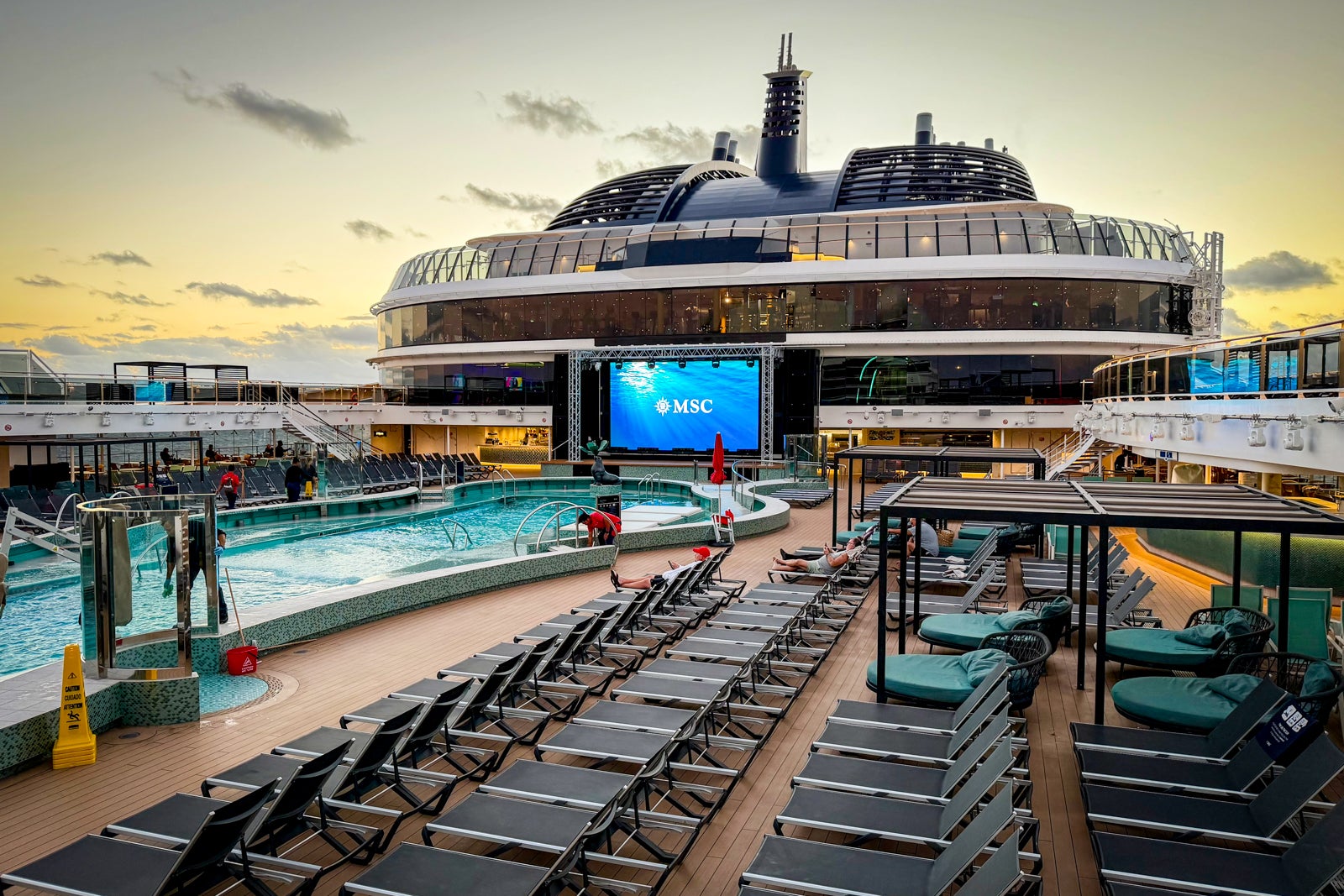
The cruise line is partnering with marine conservation organization ORCA to place a dedicated Marine Mammal Observer (MMO) onboard the upgraded MSC Poesia during the peak whale season this summer. The initiative was announced at Cruise Lines International Association’s (CLIA) Pacific Northwest Symposium last month.
“Instead of waiting to react to regulatory changes or industry pressure, we’re choosing to lead,” said Linden Coppell, vice president of sustainability and ESG at MSC Cruises. “That means investing in marine conservation as a core part of our operating model and setting a higher standard from the outset.”
ORCA’s MMO will work directly with the ship’s bridge officers responsible for navigation and speed decisions to help identify whales in real time, support whale-avoidance training, and collect new data on how whales respond to vessel presence and activity.
The initiative builds on years of collaboration between ORCA and the shipping sector. The organization has trained thousands of seafarers from over 40 shipping companies in whale protection. MSC Cruises alone has had nearly 700 crew members undergo ORCA whale-avoidance training worldwide.

Building an Evidence Base at Sea
Over the course of the season, ORCA’s observer will assemble a detailed record of life at sea alongside a moving cruise ship. The team will track the ship’s route against whale sightings, measure proximity, document behaviors, and identify emerging patterns.
“Our goal is to build the most complete picture possible and an evidence-based understanding of how whales and vessels interact, so bridge teams can make informed navigation decisions that reduce the potential for disturbance,” said Steve Jones, chief operating officer at ORCA.
Findings from the season will be shared with the scientific community and used to further inform the whale avoidance training ORCA provides to deck crew across the cruise and shipping industries, including MSC Cruises.
In addition to crew training, the data has wider implications for marine planning and conservation policy. ORCA’s data feeds into international conservation initiatives, including the IUCN’s Important Marine Mammal Areas (IMMAs) program, which informs regulatory and policy discussions about protections for marine mammals globally.
In other regions, such as the Southern Ocean, ORCA’s research has supported the creation of geofenced areas and refined speed guidance in high-density whale habitats, including the Antarctic Peninsula and South Georgia. Alaska represents another important habitat that could benefit from industry action to protect whales.
Raising the Bar in Wildlife-Rich Destinations
Alaska attracts travelers for its glaciers and wildlife, many of whom share a deep affinity for the outdoors and marine ecosystems. Survey research into whale-watching tourism shows that a large segment of travelers value responsible tourism that protects the landscapes and wildlife that make the destination so unique.
“From an operational perspective, safety and environmental protection always come first. The MMO’s primary role is to support bridge teams and inform navigation decisions,” Coppell said. “However, we also see a powerful opportunity to engage guests in a meaningful way.”
During each itinerary, the MMO will host onboard educational sessions and talks outlining the research underway, where guests will learn about whale behavior, marine biodiversity, and how responsible cruise operations work in practice. Passengers will also be introduced to ORCA’s citizen science initiatives, inviting travelers to contribute to long-term data collection efforts.
“Alaska is the ideal place to demonstrate that environmental responsibility and memorable travel experiences can go hand in hand. The goal is not to stage conservation, but to embed it into how we operate, and share that story with our guests,” Coppell said.
ORCA will also review the whale-watching tours MSC Cruises offers to guests while in port, identify operators that follow best practices, and provide feedback throughout the season.

A Test Case for the Future of Cruise Operations
If the data collected onboard MSC Poesia leads to measurable refinements in training and navigation protocols, the model could be applied in other wildlife-rich regions.
Jones sees a growing appetite from cruise lines to deepen that kind of collaboration. “It’s a really exciting time to be working with cruise brands because of the engagement we’re seeing from companies like MSC Cruises,” he said. “In the next five to 10 years, we’ll see even more interest from brands that want to be responsible corporate citizens and play their part in leaving a positive legacy in the natural environment.”
For MSC Cruises, Alaska is both a new market and part of the company’s North America expansion, with a second Alaska season already on sale for 2027. At the same time, it’s testing how marine science can be integrated into day-to-day decision-making on the bridge.
“Alaska is a living laboratory for understanding how vessels and marine mammals share space,” Coppell said. “What we learn here will inform our operations in Alaska and help shape best practices all around the world.”
If that approach gains traction, Alaska could provide an early glimpse of how the next phase of cruise operations could take shape.
To learn more about MSC Cruises, visit msccruisesusa.com. To learn more about ORCA, visit orca.org.uk.
This content was created collaboratively by MSC Cruises and Skift’s branded content studio, SkiftX.