
Blog
What I Hate About Hotel Tech

Recently, The Wall Street Journal published an article about the frustrations travelers still face with hotel-room technology.
I read it with one overwhelming reaction:
How are we still here?
After more than 20 years of talking, advising, designing, reviewing, and troubleshooting hotel technology, it is astonishing that so many of the same avoidable issues still remain. Not futuristic issues. Not expensive moonshots. Not obscure edge cases. No AI needed here.
Just the basics.
That last point matters.
Because the best hotel technology should be invisible.
It should be so well planned, so intuitively designed, and so operationally sound that the guest barely notices it. No repeated logins. No crawling behind furniture. No failed casting attempts. No guessing which light switch does what. No returning to the room to find devices not charged because the hotel cut power when the guest stepped out.
And yet, across the industry, we are still building friction into the guest journey and then acting surprised when satisfaction scores suffer.
The industry still confuses “smart” with “useful.”
Too much hotel technology is designed to impress project teams rather than serve guests.
-
A “smart” TV that takes ten minutes to figure out is not smart.
-
An app-only room service journey is not innovative if it makes hospitality feel colder.
-
A beautifully designed room with nowhere convenient to charge a phone is not guest-centric.
-
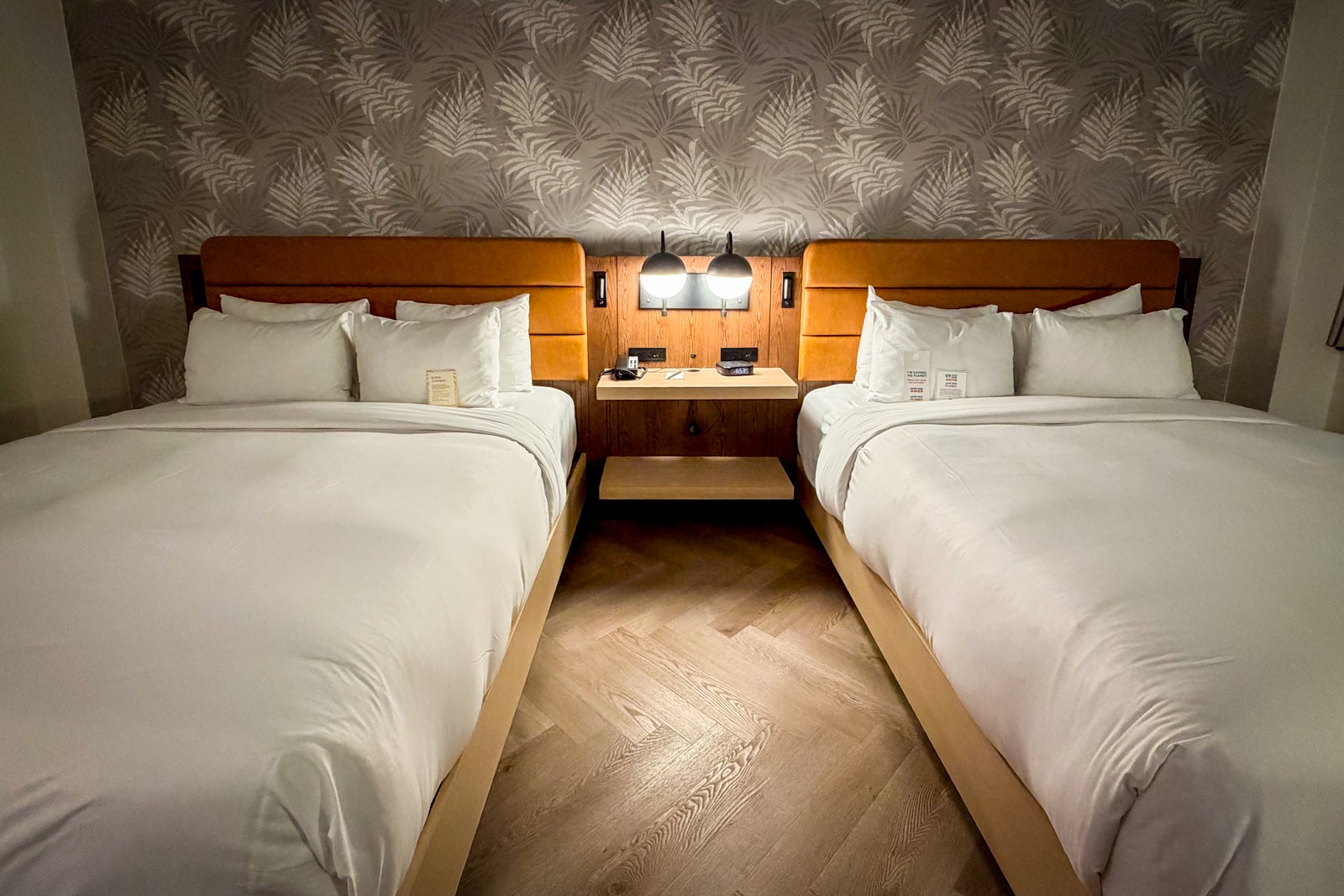
A stylish bedside panel that lets one guest switch off the lights, but not the other, is not thoughtful design.
It is amazing how often the industry gets seduced by aesthetics, interfaces, and feature lists while overlooking the very things that define comfort, convenience, and usability.
Guests do not reward technological ambition.
They reward ease.
Wi-Fi is now more important than hot water
Provocative? Perhaps.
True? Absolutely.
A guest may tolerate many things, but they will not tolerate poor connectivity, especially at premium rates. In a world of cloud work, streaming, gaming, video calls, multiple devices, and instant speed testing, weak Wi-Fi is no longer a minor annoyance. It is a brand failure.
And let us be honest: every guest now knows how to run Speedtest.
So when they pay $250, $350, or more per night and encounter dreadful speeds, repeated authentication prompts, or patchy coverage, their reaction will not be neutral. It will go straight to frustration, review scores, and NPS.
Hotels must stop treating Wi-Fi as an amenity and start treating it as mission-critical infrastructure.
You can never have too many power sockets
The shortage of convenient power in hotel rooms remains one of the industry’s most baffling failures.
Guests today travel with phones, laptops, tablets, watches, earbuds, battery packs, and sometimes work equipment on top. Yet many rooms still behave as though one outlet by the desk and another hidden behind a bedside table should be enough.
It is not enough.
Sockets should be everywhere a device may reasonably be placed: bedside, bathroom, desk, TV console, lounge chair, deck, and anywhere else within natural reach. And yes, universal and USB-C capability should now be standard, not exceptional.
A simple design principle applies:
If a guest can put a device there, they should be able to charge it there.
And please, let us stop cutting power to useful outlets when guests leave the room. Guests leave devices charging. They leave items to update. They leave the equipment processing. Returning to find everything still on low battery, or powered down, is a needless irritation and an avoidable own goal.
The guest decides which side of the bed to sleep on
One of my long-standing irritations is bedside control logic.
Guests should be able to turn off all room lights from either side of the bed. Not one side. Both sides.
The hotel should not decide where the guest sleeps based on where the phone used to be.
As in-room telephones continue to fade in importance, this becomes even more obvious. The control strategy should follow guest behavior rather than outdated room-planning assumptions.
And yes, call it what it should be called:
Good Night.
Simple. Clear. Human.
Energy management also needs a rethink
Those wall-mounted keycard slots are, in my view, a relic.
They are clumsy, wasteful, easily bypassed, and increasingly out of step with modern sustainability expectations. If the industry is serious about energy efficiency [and I truly hope it is], guest comfort, and intelligent operations, then occupancy sensing should be the standard.
Real energy management should be sensor-driven, occupancy-aware, and designed around actual room behavior. That is better for sustainability, better for owners, and better for the guest experience.
Bright bathrooms are not a luxury issue. They are a common-sense issue.
I may not be a woman, but I do know this: badly lit hotel bathrooms remain an unnecessary irritation.
And this is one of the easiest fixes in the business.
For all the industry’s obsession with mood, ambiance, and decorative lighting, many bathrooms still fail at the one thing guests actually need: visibility.
In all my years in hospitality [and there’s a lot], I have never heard a guest complain that the bathroom was too bright.
The opposite? Many times.
Better bathroom lighting is not a threat to design. It is a basic expression of consideration for guests.
Hotel tech should fade into the background
This is the central point.
Technology in hotels should not become part of the guest’s mental load. It should not demand work. It should not require tolerance. It should not be “managed” by the guest.
It should simply work.
That means:
-
Seamless TV access
-
Fast and persistent Wi-Fi
-
Abundant charging points
-
Better bedside logic
-
Brighter, more functional bathrooms
-
Proper workspaces
-
Intelligent energy management and, above all, technology that supports hospitality rather than competing with it
Because when hotel technology works properly, the guest does not praise the system.
They praise the stay.
And when it fails, the guest does not blame the vendor, the integrator, the designer, the operator, or the procurement decision.
They blame the hotel.
Final thought
For an industry that talks endlessly about guest experience, it is remarkable how often we still ignore one of the most visible, measurable, and fixable contributors to it.
The future of hotel tech is not about more gadgets.
It is about less friction.
And until more hotels understand that, we will continue to build rooms that look impressive in photographs but quietly disappoint the people actually staying in them.
Made with the help of AI tools and with a HITL.