
Blog
What to See in Do in Lyon, one of France’s Most Underrated Cities

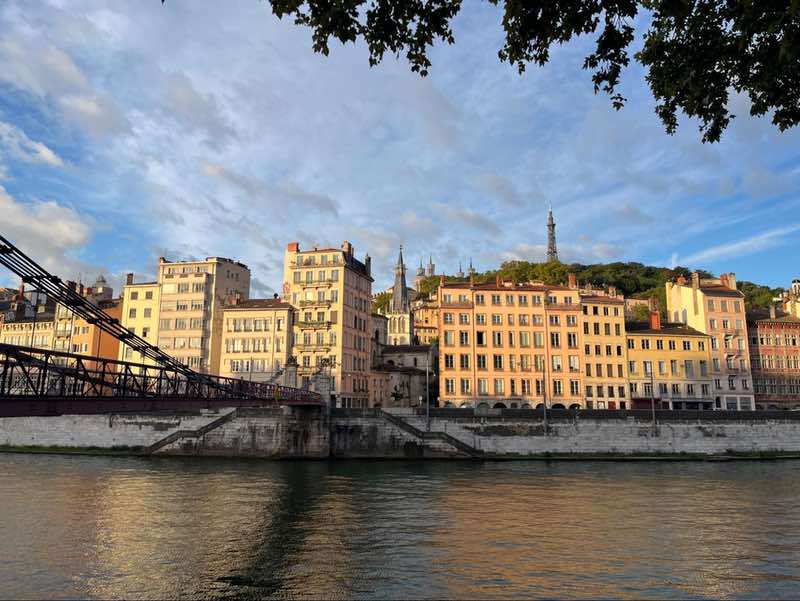
Despite being one of France’s major cities, Lyon is under-visited and often overlooked. Relatively small and easy to navigate, the city has a stunning, unmissable old city, vibrant neighborhoods, green spaces, diverse museums and cultural institutions, and plenty of incredible food. (This is France’s capital of gastronomy after all.) It’s also a city with many legacies: it was once the capital of the Roman Empire, the epicenter of Europe’s silk-weaving industry, the birthplace of film, and the base of the French Resistance during World War II.
I moved here less than two years ago, and while the city has a completely different feel from cosmopolitan Paris, it has a strong identity all its own, plenty to explore, and fewer tourists. It’s also excellently located. Lyon is often considered the gateway to the Alps, and it’s a relative stone’s throw from Provence and the Côte d’Azur. It’s also smack in the middle of some of France’s best wine regions.
Table of contents: ()

Orientation
Lyon’s geography is defined by its two hills, Fourvière and Croix-Rousse, and its two rivers, the Rhone and Saône, both of which hug either side of Lyon’s peninsula, known as the Presqu’île, before converging at its southern point. The northern part of the Presqu’île is considered the city center, while the southern portion is the more industrial-looking Confluences district.
The north side of the peninsula creeps upward toward Croix-Rousse hill. The neighborhood on this slope is known as Les Pentes. It’s the city’s artsy, bohemian quarter. At the top is Croix-Rousse, which is home to many families and, in many ways, feels like a village within the city.
West of the Presqu’île is Lyon’s magnificent Old City, Vieux Lyon, with its cobblestone streets and burnt sienna, blush, and champagne medieval and Renaissance buildings. Pushing up against the old city is Fourvière Hill, home to the Basilica Notre Dame.

East of the Presqu’île are neighborhoods like Brotteaux and Part-Dieu, parts of which have a more wealthy residential and commercial feel. This part of the city is also home to Lyon’s largest green space, the Parc Tete d’Or.
First-time visitors to Lyon should ideally base themselves in the Presqu’île or even in Vieux Lyon to have easy access to all of the city’s major sites. While many come here for 1 to 3 days, there is enough to fill at least a week-long stay. Here are some of my recommended ways to explore this lovely French city.

Visit Fourvière and Vieux Lyon
Lyon’s history stretches back two millennia to 43 A.D., when it was called Lugdunum, the Roman Empire’s capital of Gaul. Vestiges of this ancient time are still delightfully part of the city’s fabric today and include the impressive Roman Amphitheatre and Odéon theater, where the Nuits de Fourvière Music Festival is held for two months every summer. This ancient site sits on the same grounds as the Museum of Gallic-Roman History—a great place to learn more.

Nearby is the Basilica Notre Dame de Fourvière, which overlooks the city. The basilica itself is a mix of Byzantine, Gothic, and Romanesque architecture and has a dazzling mosaic interior. Next, take a break at the large, open park next to the church and take in the panoramic view. On a very clear day, you may even see Mont Blanc in the distance.
Off to the side of the park is La Tour Métallique, a former TV transmitter, which looks like the top of the Eiffel Tower was dropped upon the hill. It’s a quintessential part of the city’s silhouette.
Vieux Lyon sits just below Fourvière. You can easily walk (and catch some more great views) or take the funicular down. Vieux Lyon is really the shining star of this city, and it should not be missed. Its Renaissance architecture, earthy colors, and cobbled streets are enchanting. It can be touristy, yes, but worth the visit anyway.

There are plenty of restaurants, bars, and cafes to choose from here, and the atmosphere is great. While some are mediocre, there are still some great options, such as Soma and Les Lyonnaise. St. Jean Cathedral is located here, too, which has a beautiful 14th-century astronomical clock inside.

Several museums are also located in Vieux Lyon. The Musées Gadagane houses both the Lyon History Museum and the Museum of the Art of Puppetry. The latter is kind of fitting given that Lyon is also the birthplace of Guignol puppets, with their distinct hand-painted wooden heads and cloth-robed bodies. There’s a beautiful café and garden inside the museum that is accessible to anyone, whether or not you’re visiting the museum.
Passionate film buffs will also enjoy the Museum of Miniatures and Cinema, located in a stunning Renaissance mansion. Come here to see props and costumes used in hundreds of movies from Star Wars to Jurassic Park. The top floor is a separate, delightful display of 120 captivating miniature movie sets designed by artist Dan Ohlmann, and is the best part of the museum in my opinion.
Vieux Lyon is also a great place to explore the city’s traboules and miraboules, hidden passageways and connected courtyards which weave through the city. There are about 500 traboules in Lyon, but only 50 are open to the public, and they are best seen with the help of a guide. While some are just simple stone walkways, others reveal stunning interior gardens and terracotta balconies. They were primarily used by Lyon’s silk workers to transport their products down from Croix Rousse hill in the quickest way possible. Later, during World War II, they were used by the resistance to evade the Gestapo.

Visit the Presqu’île and Les Pentes
The northern section of Presqu’île is lively and convenient. Here you’ll find Place Bellecoeur, the largest pedestrian square in Europe, considered Lyon’s official center. Places des Terreaux is also here, and it holds the famous Bartholdi Fountain. Lyon’s Fine Arts Museum is located along its edge in a beautiful converted 17th-century abbey with a cloistered garden. (Also open to the public.) And the Fresque des Lyonnais, the most famous of the roughly 100 huge street murals in and around Lyon, is located here. It depicts the 30 most famous people from Lyon’s history, from the Roman Emperor Claude to Antoine de St-Exupéry, author of “The Little Prince.”

It’s also a must to visit Rue Mercier, a pedestrian street filled with great restaurants, bars, and cafes. It’s a fun and lively place to hang out, and it’s not far from the Saône, so it’s easy to head over there to have a drink along the water and take in the view of Vieux Lyon across the river.
Head north of Place des Terreaux to explore Les Pentes, which is chock full of vintage clothing stores, make-your-own-ceramic cafes, record stores, boutiques, and concept shops. Plus, lots of bars, cafes, and restaurants serving nearly anything from Middle Eastern to Indian to Italian. It’s lively and fun to explore.
Explore Lyon’s Ties to Silk at Maison des Canuts in Croix Rousse
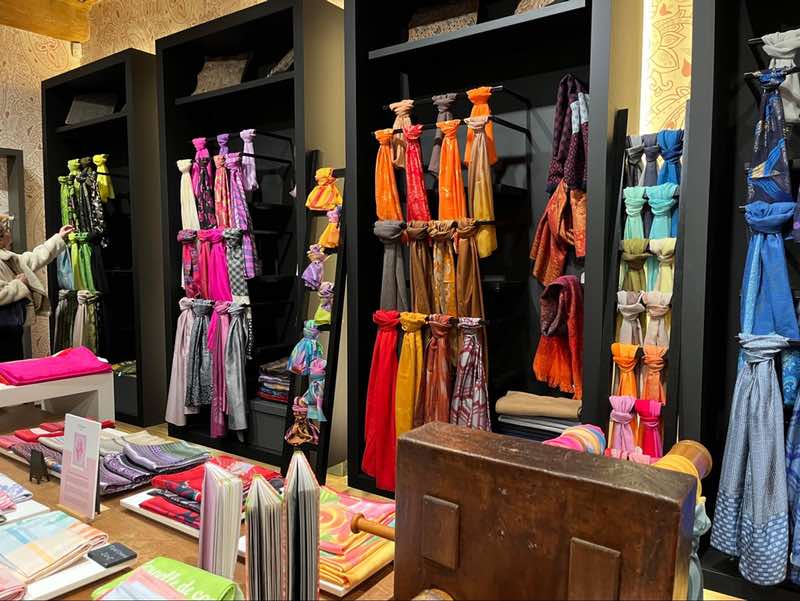
Lyon was the former beating heart of Europe’s booming silk industry for several hundred years, a fact that has left a unique imprint on the city’s look and feel. Hundreds of silk weavers known as “canuts” lived in the Croix-Rousse neighborhood, where they did the backbreaking work of silk weaving for 14+ hours a day. They and their families lived and worked in the same space, so the buildings in this neighborhood are distinct for their high ceilings that would accommodate their jacquard looms and their huge windows to let in maximum light. Today, many are gorgeous loft apartments with wooden mezzanines and exposed ceiling beams. The Maison des Canuts in Croix-Rousse is a great place to learn more about the lives of these workers, the silk weaving process, and the history of the industry in the city.

Resistance and Deportation History Center
Lyon was also the capital of the French Resistance during World War II. This part of Lyon’s history can be explored in greater depth at the Resistance and Deportation History Center, now located in the former Gestapo headquarters. It’s a worthwhile stop to learn more about this part of Lyon’s history.
Learn about the birth of motion pictures at the Lumiere Museum
Another legacy, perhaps the most surprising, is that Lyon is actually the birthplace of film. In 1895, brothers Auguste and Louis Lumière made the first motion picture, “Exit of the Lumière Factories,” with the cinématographe camera and projector, both of which they invented. Their story is showcased in their former childhood home, now the Musée Lumière and Institute.
Visit Parc de la Tete d’Or
You could easily spend an entire day at this roughly 300-acre park located near the Rhone River. It has a zoo and a small botanical garden, both free to access, a pond where you can rent boats, cafes and snack bars, a small amusement park, a puppet theater, and plenty of open green spaces. A mini-train runs through the park, which is good if you have kids or just want an overview. On sunny days, many people come here to picnic or just hang out.
Lyon’s Gastronomy
Food is arguably Lyon’s biggest claim to fame. While Lyon boasts among some of the highest concentrations of Michelin-starred restaurants, the opportunities to eat great food here are everywhere, and they don’t need to be pricey. Places like the Les Halles de Lyon Paul Bocuse, an indoor food hall and market in the Part Dieu neighborhood, are a fantastic option. While the building itself is not much to look at, the food is delectable. Here, you can wander for hours, tasting (or even just admiring) the displays of terrine, foie gras, oysters, cheeses, pastries, chocolates, and more, arranged like fine jewelry in a case. It’s also a great place to take a food tour.

Paul Bocuse, who passed away in 2018 at age 91, was named France’s “Pope of Gastronomy” and one of the pioneers of “nouvelle cuisine,” a movement that moved away from heavy sauces and more towards lighter cooking that favored individual ingredients. Les Halles is one of the most delightful places that bears his name. There’s Comptoir Paul Bocuse in the market, but whether you’re in the mood for pasta, Spanish tapas, or Russian caviar, you can find excellent options here.

Then there are the Lyonnais bouchons, traditional restaurants where silk workers sought sustenance to fuel their long workdays. Today, they remain a part of the city’s identity as local restaurants with cozy atmospheres of checkered tablecloths and wood-paneled interiors serving simple, hearty meals. Common dishes include quenelles, which resemble a soft version of polenta and are made with pike and doused in thick sauce, and tablier de sapeur (fried tripe). Look for the “Les Bouchons Lyonnais” label usually placed near the restaurant’s entrance before choosing a bouchon. The label ensures the restaurant serves the traditional dishes and local ingredients.

Explore Wine Country
Lyon is situated just north of the Rhone Valley and south of Beaujolais and Burgundy. There’s even a saying that Beaujolais is the third river of Lyon (and it never runs dry). Taking a day trip from Lyon to see some vineyards and do some wine tasting is an easy and fun activity. The best way to do so is to go on an organized tour that will organize transport for you, which is easy and safe. It’s also a nice way to explore the countryside outside the city.

Some recommended spots:
Eating
(Vieux Lyon) Soma, Les Lyonnais, Notre Maison, Chez Grand-Mère; (Presqu’île) Comptoir Abel, L’Atelier des Augustins; Brasserie des Deux Rives, Le Mercier
Cafes and Bakeries
(Vieux Lyon) Boulangerie Saint-Paul; Puzzle Café; (Les Pentes) Kafe Stockholm, Fika, Bonomia, Le Perko Café, Cocol; (Croix-Rousse) Jadis, Boulangerie des Canuts, Crema; (Presqu’île) Slake Coffee House, Les Éclaireurs Pâtissiers
Lyon Travel Tips
- Public wifi is readily available in Lyon, but it’s always important to use safeguards while using it. Whenever you’re online while traveling or in a public place, be sure to use a VPN, such as the Chrome VPN extension, to protect yourself.
- Lyon’s weather can be a little erratic, and Lyon can be particularly windy, so be sure to dress in layers, and it’s always a good idea to bring an umbrella along with you.
- As mentioned earlier, since Lyon’s hills are a key part of its geography, be sure to wear comfortable shoes.
- The city can be traditional in that many restaurants close for several hours after lunch before reopening for dinner. If you’re hungry for a meal in the middle of the afternoon, you’ll have fewer options. Look for places that may have service continu, or service continued throughout the day.